|
|
COVID-19 InformationRemember to continue to report all cases of COVID-19 in children and staff at your child care to Snohomish Health District.Call 425-252-5415 (child care health line), 425-339-5278 (call center), or email childcarehealth@snohd.org.
Here are a few resources for managing COVID-19:
|
|
|
|
Care and Resources in Times of TragedyOur hearts go out to the staff, families and loved ones affected by the tragedies in our country and around the world. These events can be especially difficult for those caring for children to process. Sometimes it can be helpful to access professional help to cope with intense feelings and emotions.
Snohomish County has Crisis Services that can be utilized by anyone, including child care staff, families and children. The Snohomish County Crisis Responders can be reached through the Crisis Services Line 24/7 at (800) 584-3578.
Public Health Seattle-King County shared the following resources which we would like to pass on. Washington State has resources available to help with mental health and well-being. For more information please visit: https://coronavirus.wa.gov/information-for/you-and-your-family/mental-and-emotional-well-being. The following resources are available for those in need.
Please reach out with any additional questions you may have to ChildCareHealth@snohd.org.
|
|
|
|
ABC's for Healthy KidsThis month we continue our ABC's for Healthy Kids feature. We encourage child care providers to take this information from Snohomish Health District and share it with your parents. You can include these mini-articles in your newsletters or print out activity pages from our website to do with children and send them home.
You can learn more or get fun activities for children at www.snohd.org/healthykids. |
|
|
|
J is for Just Breathe
The J in our ABC's for Healthy Kids stands for just breathe.
Your mental and emotional wellness matters. The mental health of parents and guardians impacts the mental and physical health of children. Finding time for self-care can be challenging. Making spare moments count each day can make a big difference. Ask for help. There is no shame in needing support – most parents and caregivers do.
Read the latest ABC's for Healthy Kids Blog to find out more
|
|
|
|
K is for Keep Things Locked UpMedications, alcohol or marijuana products should always be securely stored, and it’s important to be aware of which products and how much of them you have in your home. A core part of gun safety is safe storage – make sure any firearms in your home are not accessible to anyone without your permission and supervision. Locking doors at home, locking cars when not in use, and safely storing cleaning or yard products are other considerations when making sure your home is a safe space for children. More in our latest blog
|
|
|
|
|
Seasonal Allergies or COVID-19?Spring is here!Allergies can be an annoyance. They can be especially frustrating during the pandemic. That’s because the symptoms can feel a lot like COVID-19, particularly the milder forms of the illness. So how do you know whether it’s a case of seasonal allergies or COVID-19? Read on for our tips.
There’s a lot of overlap in symptoms. Both seasonal allergies and COVID-19 s hare symptoms like coughing, congestion and sore throats, among other symptoms.
Seasonal allergies are immune system responses triggered by exposure to allergens, such as seasonal tree or grass pollens, and pollen season is getting worse every year because of climate change.
Although allergy symptoms can happen any time of the year, allergens are most often in the air during the spring season.
There are some distinctions between symptoms from allergies and from COVID-19.- Symptoms like chills and fevers are rarely associated with allergies and are more commonly found in viruses like COVID-19 or the flu.
- Also rare with allergies are symptoms like chest pain, shortness of breath, and loss of taste and/or smell that are more common with a COVID-19 infection.
- Symptoms more commonly associated with allergies include itching in the nose or eyes.
- Sneezing is also more common with allergies than it is with COVID-19.
For a more detailed breakdown, the Asthma and Allergy Foundation of America put together a chart comparing symptoms of COVID-19, cold, flu, seasonal allergies, and asthma.Because there is so much overlap in symptoms, it’s best to be cautious. That means taking a COVID-19 test if you’re not feeling well. Remember, you can order two free COVID-19 test kits per month through Say Yes! COVID Test. If you test positive for COVID-19, isolate, and stay away from others, including people you live with. If you have symptoms but do not test positive for COVID-19, stay home if you can to prevent the spread of germs to others.
|
|
|
|
Advancing Health Literacy Provider SurveyWe invite you to take part in distributing a survey to your clients who may be most underserved/at risk for COVID-19. The survey is sponsored by the Snohomish Health District and partner organizations for the Snohomish County Advancing Health Literacy Grant and funded by the Department of Health and Human Services (HHS). The survey goal is to understand how residents in Snohomish County access, understand, and use materials, information, and resources for COVID-19 as well as any barriers that get in the way of people getting the assistance and information they need to make well-informed decisions about COVID-19. A summary report will be prepared and shared with the Snohomish Health District to help us improve services to people in Snohomish County.
Please share the survey link with your clients. Or if you prefer, please contact Ellora Larson (elarson@snohd.org) for paper copies. We will be happy to deliver and pick up surveys as well. After July 8, 2022, we will not be accepting responses to the survey.
The survey is voluntary and responses are completely anonymous. No names or other identifiable information should be included. Responses to the survey will be looked at together. There is no way that anyone can identify individuals. A summary report will be done by Dr. Robin Fenn of Bastyr University and shared with the Snohomish Health District. The survey has been reviewed and approved by the Institutional Review Board (IRB). If you have any questions about this survey, you can contact Dr. Robin Fenn at rfenn@bastyr.edu or Ellora Larson at the Snohomish Health District (elarson@snohd.org).
Thank you so much for your support and participation.
|
|
|
|
Safe Sleep for Babies Act Signed into Law
On May 16th 2022, President Joseph R. Biden signed into law the Safe Sleep for Babies Act, which makes it illegal to manufacture inclined sleepers or crib bumpers for infant sleep, both of which have been linked with more than 200 reported deaths.
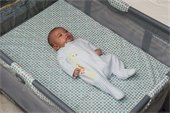
The American Academy of Pediatrics (AAP) has advised against using inclined sleepers and crib bumpers because they increase the risk of suffocation and sleep-related infant death. AAP’s safe sleep recommendations for infants are for them to sleep alone, on their back, on a firm, flat surface, with no extra padding or loose objects like pillows, blankets, or toys in their space.
For more information on Safe Sleep please contact the Child Care Health Outreach Program at Childcarehealth@snohd.org or by calling 425-252-5415.
|
|
|
|
Lactation Feeding Friendly Environment Child Care Survey 2022
Is your child care a Lactation Feeding Friendly Environment?
A Lactation Feeding Friendly child care program promotes and supports lactation and breast/human milk feeding for the families they serve and their staff. They understand and value the importance of breast/human milk and recognize that many families want to continue to offer breastmilk to their child after returning to work. The Lactation Feeding Friendly child care program provides a safe and welcoming environment for all families as well as their staff.
The Snohomish Health District is developing a program to recognize child cares who offer this type of welcoming environment. We have created a survey that will guide us in developing the best toolkit possible to assist your child care in becoming recognized as a Lactation Feeding Friendly Environment.
This short survey consists of 10 questions and should take no longer than 10 minutes to complete. Please select the response that best fits your child care. We appreciate any responses to the questions that you can provide.Lactation Feeding Friendly Child Care Survey 2022
|
|
|
|
Free STARS Credit for Providers Serving the Eastern European CommunityIf you serve families from Eastern European communities, we are able to provide you and your staff with free STARS credits for completing a related online course. You can find the class in our course catalog here: Course Catalog - childcare (talentlms.com)
The goal of this course is to assist learners in providing resources and relevant information to members of the Eastern European Community to help promote confidence in the COVID-19 vaccines.
|
|
|
|
|
|
|
|
This Month's Featured Classes
|
|
|
|
|
|
Helping the Eastern European Community Gain Confidence in the COVID-19 VaccineThis course is being offered as a Public Health Service by Snohomish Health District to build equity in the community and provide support to the Eastern European population. The course is being offered to both child cares and schools in Washington State who serve, educate, or live in the Eastern European Community. For a limited time, you can receive 1 in-service hour (1.0 STARS credit or clock hour) at no cost upon completion of this course.
Register Here
The objective of this course is to assist learners in providing reliable resources and relevant information to members of the Eastern European Community to help promote confidence in the COVID-19 vaccines.
|
|
|
|
Contact InformationSnohomish Health District, 3020 Rucker Ave., Ste. 104, Everett, WA 98201
Email: childcarehealth@snohd.org
Program Phone: 425.252.5415
Website: http://www.snohd.org/238/Child-Care-Providers
Received this as a forward? Sign up for our newsletter by clicking here.
The Child Care Health Outreach Program staff are available to consult with you on these and other health, safety, and nutrition topics by phone, by email, or at your child care. |
|
|
|
|
|






 Share on Facebook
 Share on Twitter
 Share via Email
