School Food for Thought Newsletter Header
  • Arial
  • Georgia
  • Impact
  • Tahoma
  • Times New Roman
  • Verdana
  • 8
  • 9
  • 10
  • 11
  • 12
  • 14
  • 18
  • 24
  • 30
  • 36
  • 48
  • 60
  • 72
  • 96
  • Align Left
  • Align Center
  • Align Right
  • Align Justify
  • Default
  • Lower Alpha
  • Lower Greek
  • Lower Roman
  • Upper Alpha
  • Upper Roman
  • Default
  • Circle
  • Disc
  • Square
  • Normal

  • Headline

  • Subhead 1

  • Subhead 2

  • Hyperlink
  • Spanish
  • Chinese
  • Tagalog
  • Vietnamese
  • French
  • Korean
  • German
  • Arabic
  • Russian
  • Italian
  • Portuguese
  • Hindi
  • Polish
  • Japanese
  • Urdu
  • Persian
  • Gujarati
  • Greek
  • Bengali
  • Panjabi
  • Telugu
  • Armenian
  • Hebrew
  • Hmong
  • Haitian Creole
School Food Safety Icon with lunch tray

Snohomish County School Safety Webpages

The Snohomish County Health Department has two webpages for schools, providing information and resources. One is the newly created School Food Safety page, focusing on food in school. This includes temporary permit information for groups wanting to serve food outside of the school kitchen’s permit and creating food sharing tables. The other is the School Health and Safety webpage, which focuses on inspecting everything else in the school, from air quality to playgrounds to science labs and more. Check out both pages and refer those with questions to those sites!

  • Arial
  • Georgia
  • Impact
  • Tahoma
  • Times New Roman
  • Verdana
  • 8
  • 9
  • 10
  • 11
  • 12
  • 14
  • 18
  • 24
  • 30
  • 36
  • 48
  • 60
  • 72
  • 96
  • Align Left
  • Align Center
  • Align Right
  • Align Justify
  • Default
  • Lower Alpha
  • Lower Greek
  • Lower Roman
  • Upper Alpha
  • Upper Roman
  • Default
  • Circle
  • Disc
  • Square
  • Normal

  • Headline

  • Subhead 1

  • Subhead 2

  • Hyperlink
  • Spanish
  • Chinese
  • Tagalog
  • Vietnamese
  • French
  • Korean
  • German
  • Arabic
  • Russian
  • Italian
  • Portuguese
  • Hindi
  • Polish
  • Japanese
  • Urdu
  • Persian
  • Gujarati
  • Greek
  • Bengali
  • Panjabi
  • Telugu
  • Armenian
  • Hebrew
  • Hmong
  • Haitian Creole
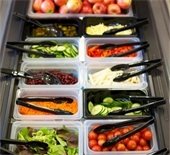
School Salad bar

TIME AS A Public Health CONTROL

There can be a lot of confusion when it comes to using Time as a Public Health Control (TPHC) in a school kitchen. TPHC uses time (4 hours) as the control for food safety instead of temperature. The most common use of TPHC in a school kitchen is to use it for Temperature Control for Safety (TCS) food in thermal/non-electric holding equipment, such as salad bar equipment. 

A written procedure must be in place for any kitchen using TPHC. The written procedure must be prepared in advance and contain: The TCS menu items being held using TPHC, how you plan to keep track of the time and the discard procedures. (Examples of common TCS menu items are meat, cheese, hard-boiled eggs, beans, cut melon, cut tomatoes, and cut lettuce.) A copy of the TPHC procedure must be kept on site and made available to the Snohomish County Health Department upon request.

TPHC cannot be used in lieu of maintaining cold/hot holding equipment (any holding equipment with a plug). TPHC is not meant to be a backup in case of an emergency. It is meant to be a written policy that is carefully followed and monitored. The time in and time out needs to be documented on a temperature log or label. Food must begin at 41°F or less if removed from cold holding, 135°F or greater if removed from hot holding or fully cooked to the minimum required cooking temperature. The food must be served or thrown away within 4 hours of the time the product was taken out of temperature control. If there is any product that does not have a log or label or if the log or label was marked incorrectly, the product must be thrown away.

  • Arial
  • Georgia
  • Impact
  • Tahoma
  • Times New Roman
  • Verdana
  • 8
  • 9
  • 10
  • 11
  • 12
  • 14
  • 18
  • 24
  • 30
  • 36
  • 48
  • 60
  • 72
  • 96
  • Align Left
  • Align Center
  • Align Right
  • Align Justify
  • Default
  • Lower Alpha
  • Lower Greek
  • Lower Roman
  • Upper Alpha
  • Upper Roman
  • Default
  • Circle
  • Disc
  • Square
  • Normal

  • Headline

  • Subhead 1

  • Subhead 2

  • Hyperlink
  • Spanish
  • Chinese
  • Tagalog
  • Vietnamese
  • French
  • Korean
  • German
  • Arabic
  • Russian
  • Italian
  • Portuguese
  • Hindi
  • Polish
  • Japanese
  • Urdu
  • Persian
  • Gujarati
  • Greek
  • Bengali
  • Panjabi
  • Telugu
  • Armenian
  • Hebrew
  • Hmong
  • Haitian Creole
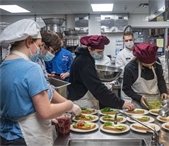
Students in High School Culinary class

COOKING CLASSES IN SCHOOLS

Some schools offer cooking classes as an elective. This is a great way to introduce students to working with food. Food safety is part of the curriculum. It usually covers sanitation, like washing hands and avoiding cross-contamination. It also covers food preparation and temperatures to keep food safe.

There are a few important points to remember that might get missed:

  • Just like in school kitchens, water is necessary to prepare foods and wash hands. Cooking labs should be postponed if there is no water in the classroom.
  • The classroom refrigerator must keep Temperature Control for Safety (TCS) foods at 41°F or below. Check the food periodically, with a digital thermometer, to make sure it is working properly. A refrigerator thermometer should also be stored in the fridge at all times.
  • Make sure items are stored correctly. Cleaning chemicals should never be stored above food items. They should be stored in a separate space and have correct labels. Raw meat should be stored on the bottom shelves of a walk-in cooler or refrigerator.  
  • Eat all prepared food at the time of class. Don’t cool food and reheat it at a later time. This allows more opportunities for germs to grow in the food.
  • Arial
  • Georgia
  • Impact
  • Tahoma
  • Times New Roman
  • Verdana
  • 8
  • 9
  • 10
  • 11
  • 12
  • 14
  • 18
  • 24
  • 30
  • 36
  • 48
  • 60
  • 72
  • 96
  • Align Left
  • Align Center
  • Align Right
  • Align Justify
  • Default
  • Lower Alpha
  • Lower Greek
  • Lower Roman
  • Upper Alpha
  • Upper Roman
  • Default
  • Circle
  • Disc
  • Square
  • Normal

  • Headline

  • Subhead 1

  • Subhead 2

  • Hyperlink
  • Spanish
  • Chinese
  • Tagalog
  • Vietnamese
  • French
  • Korean
  • German
  • Arabic
  • Russian
  • Italian
  • Portuguese
  • Hindi
  • Polish
  • Japanese
  • Urdu
  • Persian
  • Gujarati
  • Greek
  • Bengali
  • Panjabi
  • Telugu
  • Armenian
  • Hebrew
  • Hmong
  • Haitian Creole

Classroom Food Safety

Always practice good hygiene when offering food in classrooms, including proper hand washing. Hands must be washed before setting up the event, after using the restroom, after sneezing or coughing, and as necessary when food is being served.

The Snohomish County Health Department offers the following guidelines for handling or serving food in classrooms:

Limit the types of foods allowed. All food must come from an approved commercial source – no home prepared food items due to the concern for food safety and allergens.

Limit foods that need refrigeration. You may also keep it cold by refrigerating on site or storing on ice. Meat dishes, potato and macaroni salads and pumpkin and custard-filled pies should not be brought into the classroom.

Use fresh fruit immediately. Fresh fruit can be used if it is washed and cut immediately before it is to be served. Cut melons can grow bacteria and must be refrigerated if not served immediately. Wear disposable gloves when cutting fruit or vegetables.

Only use pasteurized milk or juice. Never serve unpasteurized milk or juice of any kind, especially apple juice or cider. Any home-canned products must stay at home.

Use serving utensils, NOT bare hands. Food served to children should be served with tongs, spatulas, or other utensils. Disposable utensils and cups are preferable.
  • Arial
  • Georgia
  • Impact
  • Tahoma
  • Times New Roman
  • Verdana
  • 8
  • 9
  • 10
  • 11
  • 12
  • 14
  • 18
  • 24
  • 30
  • 36
  • 48
  • 60
  • 72
  • 96
  • Align Left
  • Align Center
  • Align Right
  • Align Justify
  • Default
  • Lower Alpha
  • Lower Greek
  • Lower Roman
  • Upper Alpha
  • Upper Roman
  • Default
  • Circle
  • Disc
  • Square
  • Normal

  • Headline

  • Subhead 1

  • Subhead 2

  • Hyperlink
  • Spanish
  • Chinese
  • Tagalog
  • Vietnamese
  • French
  • Korean
  • German
  • Arabic
  • Russian
  • Italian
  • Portuguese
  • Hindi
  • Polish
  • Japanese
  • Urdu
  • Persian
  • Gujarati
  • Greek
  • Bengali
  • Panjabi
  • Telugu
  • Armenian
  • Hebrew
  • Hmong
  • Haitian Creole
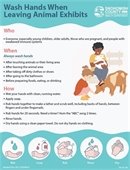
Wash hands when leaving animal exhibits handout

Things to Remember When Visiting Petting Zoos

Petting zoos are popular spots for children during the fall. While learning about animals and how to interact with them is fun and valuable, it’s also important to remember that animals can expose children to potentially serious illnesses. E. coli, salmonella, giardia, and worms are among the 30-plus diseases that can be spread by animals. Even animals that appear healthy can have germs in their hair or fur, mouth, manure, drinking water, or habitat. Assume every animal is carrying germs that could make you ill. Children are at a higher risk from these pathogens than adults. They are also more likely to put their hands in their mouths and not wash their hands well enough.  Some children also may have allergic reactions to animals.

Keep children (and adults) healthy when interacting with animals by following these tips:

  • Make sure there are washing stations that are easily accessible and stocked with soap and warm water.
  • Wash hands thoroughly with soap and running water after touching an animal or going into an animal’s living space.
  • Eat snacks or meals before petting the animals or eat in an area that is separate from all animals, after washing hands thoroughly. 
  • Make sure children are supervised and that they don’t attempt to kiss the animals, share food or toys with the animals, or put their fingers in their mouths after touching animals. Approach animals with respect and caution, as even normally non-aggressive animals can be provoked into biting or scratching. 

Find the above Wash Hands When Leaving Animal Exhibits handout on our Educational Resources page.

  • Arial
  • Georgia
  • Impact
  • Tahoma
  • Times New Roman
  • Verdana
  • 8
  • 9
  • 10
  • 11
  • 12
  • 14
  • 18
  • 24
  • 30
  • 36
  • 48
  • 60
  • 72
  • 96
  • Align Left
  • Align Center
  • Align Right
  • Align Justify
  • Default
  • Lower Alpha
  • Lower Greek
  • Lower Roman
  • Upper Alpha
  • Upper Roman
  • Default
  • Circle
  • Disc
  • Square
  • Normal

  • Headline

  • Subhead 1

  • Subhead 2

  • Hyperlink
  • Spanish
  • Chinese
  • Tagalog
  • Vietnamese
  • French
  • Korean
  • German
  • Arabic
  • Russian
  • Italian
  • Portuguese
  • Hindi
  • Polish
  • Japanese
  • Urdu
  • Persian
  • Gujarati
  • Greek
  • Bengali
  • Panjabi
  • Telugu
  • Armenian
  • Hebrew
  • Hmong
  • Haitian Creole
  • Arial
  • Georgia
  • Impact
  • Tahoma
  • Times New Roman
  • Verdana
  • 8
  • 9
  • 10
  • 11
  • 12
  • 14
  • 18
  • 24
  • 30
  • 36
  • 48
  • 60
  • 72
  • 96
  • Align Left
  • Align Center
  • Align Right
  • Align Justify
  • Default
  • Lower Alpha
  • Lower Greek
  • Lower Roman
  • Upper Alpha
  • Upper Roman
  • Default
  • Circle
  • Disc
  • Square
  • Normal

  • Headline

  • Subhead 1

  • Subhead 2

  • Hyperlink
  • Spanish
  • Chinese
  • Tagalog
  • Vietnamese
  • French
  • Korean
  • German
  • Arabic
  • Russian
  • Italian
  • Portuguese
  • Hindi
  • Polish
  • Japanese
  • Urdu
  • Persian
  • Gujarati
  • Greek
  • Bengali
  • Panjabi
  • Telugu
  • Armenian
  • Hebrew
  • Hmong
  • Haitian Creole

Notify Me

Sign up to receive this newsletter using the Notify Me page.

Share on Facebook
Share on Twitter
Share via Email

Snohomish County Health Department
3020 Rucker Ave., Everett, Washington

Powered by
CivicSend - A product of CivicPlus