WELCOME TO THE PROVIDER PULSEThis newsletter is about strengthening regular communication between the Snohomish County Health Department and medical providers. These quarterly newsletters will include up-to-date information regarding clinical best practices, current trends or emerging information, new resources, and relevant opportunities for providers and staff from all teams within the Prevention Services Division of the Health Department. Received this as a forward? You can subscribe to the Provider Pulse newsletter here. |
|
|
|
IMMUNIZATIONS AND VACCINE PREVENTABLE DISEASESUNDERSTANDING AND ENCOURAGING IMMUNIZATIONS THIS RESPIRATORY VIRUS SEASONIn the Childhood Vaccine Program's newsletter “Vaccine Blurbs” (access it here), the Washington State Department of Health detail the supply increase in nirsevimab, and the recommendations for healthcare providers. We are acutely aware of how frustrating the supply issues have been, and the stress that it has placed upon our healthcare systems. However, at this time, the Snohomish County Health Department does not have the ability to disseminate information to the public on which clinics are carrying nirsevimab. Currently, additional doses of nirsevimab remain available for ordering in WAIIS. Learn more by reviewing the RSV and Nirsevimab Recommendations Webinar from DOH recorded on 2/1/24. MCO INCENTIVES FOR HEDIS MEASURES AND IMMUNIZATION-RELATED OUTPUTS: - MCO 2023 Immunization Flyer – please note this flyer is only for clinic knowledge and NOT to be posted in patient-facing area.
To note: The incentives listed are for the 2023 year. However, depending on the MCO, some of the benefits roll into 2024, or there is a grace period for applying that continues through 2024. Please click the links within the PDF to learn more. To receive the 2024 chart as soon as it is available, please email Parris.Thompson@co.snohomish.wa.us to be added to the distribution list. FURTHER RESOURCES FOR CVP CLINICS: TEMP LOG SUBMISSION CHANGE STARTING JANUARY 1ST: Refer to the Vaccine blurb (access it here) for further detail on the REDCap submission process. Please continue to monitor your inboxes for the link to access your clinic’s portal. RAPID QI OPPORTUNITY: Interested in collaborating with other Pediatric or Family Med clinics throughout the state on improving adolescent vaccination rates? Please refer to this QI Opportunity through the Washington Chapter of the AAP.
|
|
|
|
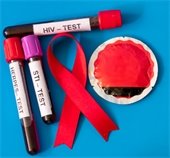
STI PROGRAM EXPANDS CLINICAL SERVICESFourteen years after the STI clinic closed its doors, Snohomish County Health Department is excited to announce the amazing opportunity to expand STI services again. The Department's STI Clinic is in downtown Everett at 3020 Rucker Ave., Suite 100. We offer confidential STI services to individuals 14 and over, per state law. Appointments are encouraged and can be made by calling 425-339-5261. As overall rates for STIs have increased across the U.S., Snohomish County has been given the opportunity to step in and offer STI services with low barriers to care for those who may not fit into a traditional medical model. The clinic can offer multi-site testing for chlamydia and gonorrhea (urine, throat, vaginal and rectal) as well HIV and syphilis testing. Treatment options also are available for individuals with symptoms or known exposures to STIs. Services are expected to expand further in 2024 as needs are determined and as funding allows. Click here for further information on the expansion of the clinic services of the STI Clinic Click here for a list of reportable diseases and for how/when to report them or reach out to the correct program by calling one of the following numbers: STI/HIV 425-339-5261 TB 425-339-5225 CD 425-339-3503
|
|
|
|
COULD IT BE TUBERCULOSIS (TB)?RECENT MMWR:According to the MMWR linked here, about half of providers are not routinely testing patients who were born outside of the U.S. for TB. For more information, please review the MMWR to determine if your testing guidelines are in alignment with CDC's recommendations. THINK TBConsider tuberculosis (TB) in adult and pediatric patients with compatible clinical symptoms of: - Cough that lasts 2-3 weeks or longer
- Fever
- Unexplained weight loss
- Night sweats and/or radiological findings
BACKGROUNDOn average, 5 cases of TB disease are diagnosed in Washington each week and an estimated 200,000 people in Washington are infected and at risk of developing disease. BE AWARE OF PEOPLE WITH INCREASED RISK OF INFECTION OR DEVELOPING TB DISEASE, INCLUDING:- Close contacts of a person with active TB disease
- Persons who have history of residence or travel to a place with an elevated TB rate. This includes any country other than the United States, Canada, Australia, New Zealand, or a country in western or northern Europe (Refer to table below for TB-endemic countries and territories).
- Children younger than 5 years of age who have a positive TB test
- Persons who have a history of latent tuberculosis infection (LTBI), especially those diagnosed within the past 2 years
- Persons who have lived or worked in a shelter, correctional facility, long-term care facility or other congregate setting
- Persons with HIV
- Persons with diabetes mellitus
- Persons who are immunocompromised
TB-ENDEMIC COUNTRIES AND TERRITORIES BASED ON 2019 INCIDENCE PER 100,000 POPULATION:(adapted from WHO global list of high burden countries for TB, TB/HIV, and MDR/RR-TB, 2021-2025): Severely Endemic (500+ new and relapse cases per 100,000 population per year)Africa: Central African Republic, Gabon, Lesotho, South Africa South-East Asia: Democratic People's Republic of Korea Western Pacific: Philippines Highly endemic (300–499 new and relapse cases per 100,000 population per year) Africa: Angola, Congo, Democratic Republic of the Congo, Eswatini, Guinea-Bissau, Liberia, Mozambique, Namibia, Zambia South-East Asia: Indonesia, Myanmar, Timor-Leste Western Pacific: Kiribati, Marshall Islands, Mongolia, Papua New Guinea Endemic (100–299 new and relapse cases per 100 000 population per year)Africa: Botswana, Burundi, Cameroon, Chad, Côte d'Ivoire, Equatorial Guinea, Ethiopia, Gambia, Ghana, Guinea, Kenya, Madagascar, Malawi, Nigeria, Sao Tome and Principe, Senegal, Sierra Leone, South Sudan, Uganda, United Republic of Tanzania, Zimbabwe Americas: Bolivia (Plurinational State of), Haiti, Peru Eastern Mediterranean: Afghanistan, Djibouti, Pakistan, Somalia Europe: Greenland, Kyrgyzstan South-East Asia: Bangladesh, Bhutan, India, Nepal, Thailand Western Pacific: Cambodia, Lao People's Democratic Republic, Micronesia (Federated States of), Nauru, Northern Mariana Islands, Tuvalu, Viet Nam Resources: |
|
|
|
COMMUNICABLE DISEASE:RABIES INFORMATIONDid you know that many animal bites and scratches don’t meet the criteria to recommend administration of post-exposure prophylaxis (PEP) for rabies? Bats are the primary animal that carry rabies in Washington state, though less than 1% of bats in the wild are infected with rabies in their lifetimes. Looking to learn more about rabies in Washington? The Washington State Department of Health’s Rabies Resource page has a helpful overview and links to resources. If you have a patient present for rabies prophylaxis following an animal encounter and have questions about whether rabies PEP would be recommended by public health, please call our Communicable Disease team at 425-339-3503. COMMUNICABLE DISEASE PROGRAM'S HEALTHCARE-ASSOCIATED INFECTIONS TEAMIT'S HERE: CANDIDA AURISCandida auris has been identified in a resident of Snohomish County just months after the first cases were identified in Washington State. Candida auris is an emerging, often multidrug-resistant yeast that can cause invasive healthcare-associated infections with high mortality. What can your organization do to prevent and identify C. Auris? Here are a few recommendations: - Use disinfectants that are effective. The EPA’s List P contains the products with kill claims against C. Auris, including the manufacturer, active ingredients, and the contact time required to be effective.
- Speak with your lab provider to verify their lab is able to speciate Candidaspp. isolates, especially those taken from normally sterile sites (e.g. bloodstream, cerebrospinal fluid). Additionally, we recommend that, when Candida spp. Is isolated from non-sterile sites, species-level identification should be considered in certain circumstances, including:
- When clinically indicated in the care of a patient.
- When a case of C. auris infection or colonization has been detected in a facility or unit, in order to detect additional patients colonized. Species identification when Candida is found in non-sterile sites can be implemented for at least one month until no evidence exists of C. auris transmission.
- When a patient has had an overnight stay in a healthcare facility outside the United States in the previous year, especially if in a country with documented C. auris transmission.
- Colonization for longer than a year has been identified among some C. auris patients; therefore, hospitals might also consider determining the species for Candida isolated from patients with more remote exposure to healthcare abroad.
- Review the Washington State Department of Health's and CDC's C. auris pages for more information and resources for patient education.
- If you have a patient with a suspected or confirmed C. auris infection or colonization, please reach out to our Communicable Disease team at 425-339-3503.
- If you have any questions about C. auris, other multidrug resistant organisms, or your infection prevention and control program, please reach out to the County Health Department's Infection Preventionist Amanda Reilly at 425-359-2364 or Amanda.Reilly@snoco.org.
|
|
|
|
INTRODUCING THE REFUGEE HEALTH PROGRAMThe Refugee Health Program serves newly arriving refugees in need of a medical exam as well as refugees who have been in the United States for a year and are in the process of completing an I-693 or “green card” application. Refugees are referred to the Snohomish County Health Department by local resettlement agencies. We have two nurses who ensure clients are up to date with needed tests and vaccinations and complete screening exams and paperwork, an administrative support specialist who keeps everything up and running, a program supervisor, and an outreach worker who speaks Russian and Ukrainian and spends time in the community doing immunization education. Please reach out to Program Supervisor Keri Moore if you have questions about the program: keri.moore@co.snohomish.wa.us
|
|
|
|
HEALTHY COMMUNITIESYOUTH VAPING QUIT KITSVaping prevention is an important strategy for keeping youth and communities happy and healthy. However, the reality is that many youth are already experiencing nicotine addiction. Interventions that include youth-specific cessation resources may be more effective in steering teens toward quitting for good. The Snohomish County Health Department’s Youth Vaping Quit Kits contain materials known to support cessation, like water bottles and flavor-infused toothpicks, as well as links to teen-friendly behavioral health programs and guidance for developing healthy coping strategies for stress and other factors that can contribute to feeling the need to vape. The quit kits were assembled in partnership with the Sky Valley Youth Coalition in Sultan. To learn more and place a quit kit order, contact Brittany.bevis-sciuto@co.snohomish.wa.us ADVANCING HEALTH LITERACYIndividual health literacy is the degree to which individuals are able to find, understand, and use information and services to inform health-related decisions and actions. Nine out of ten American adults don’t have all the literacy skills needed to navigate health diagnoses, plans, and systems. Limited health literacy is linked to poor health outcomes, including increased hospitalizations and higher rates of mortality. As healthcare providers, one thing that you can start doing now to help patients with limited health literacy is to use the Teach-Back Method. This method has been proven to save time during patient-provider interactions. It has 5 steps: - Organize information into logical chunks
- Provide the information one chunk at a time
- Ask your patient to teach the information back to you, so you can assess if you need to re-explain in a different way. Maybe say: “I know this is a lot to take in, and I want to make sure I did a good job explaining this information. Would you mind sharing with me what I told you?”
- Re-teach the information, as necessary, while using different words, analogies, and educational strategies. You could start this by saying “I’m sorry, I could have done a better job explaining this. Please let me try again.”
- Once the patient understands, move on to the next chunk.
The goal is to assess how well you are providing the information, not the patient’s ability to understand. We don’t want it to feel like a quiz, but rather a reassurance that the patient will be able to act on the information. For a quick how-to video, watch What the Heck is Teach Back? on YouTube.
|
|
|
|
MATERNAL CHILD HEALTHMAKING SURE HEALTH CARE PLANS FOR CHILDREN IN CHILD CARE ARE COMPLETE, CLEAR, AND COMPREHENSIBLEHave you ever wondered why you are asked to complete specific health forms or care plans for child care? Or have you completed a form then been told by the parent that their “child care provider says they need additional information in order for their child to attend the program”? The Child Care Health programs from Snohomish County Health Department and Public Health – Seattle & King County (PHSKC) have noted that many Individual Care Plan templates used by the pediatric provider community are geared for use in K-12 schools, not child care/early learning programs, and most are not compliant with the Washington State’s Administrative Codes (WACs) that child care/early learning programs are required to follow. Stark contrasts exist between K-12 settings and child care/early learning programs. It is important to keep the following differences in mind when completing care plans and health forms for children attending child care/early learning programs: - The WACs applicable to child cares/early learning programs are different from those for K-12 schools.
- Many health care plans are written for use in a K-12 setting and do not satisfy the individual care plan (WAC 300-110-0300) and medication (WAC 300-110-0215 requirements for early learning programs. This puts child care/early learning programs at risk of regulatory noncompliance with state licensing.
- Child care/early learning programs do not have nurses on site to implement health care plans.
- Parents/guardians must have a clear understanding of the plan because they are responsible for training child care staff on its implementation, including all medical procedures and medication administration.
- Many child care program owners/directors are unable to accept children with special medical needs because they don’t understand the plan of care.
- Child care providers don’t possess the training and medical background to make clinical judgments and assessments. Because of this, they need clear and concise instructions on how to manage the condition daily and in an emergency, for rapid implementation.
- The majority of child care providers are Black, Indigenous, and People of Color (BIPOC), and English is often their second language.
- This underscores the importance of care plans needing to be brief and written in plain language (preferably 6th grade reading level or lower).
Please try to accommodate parents’/guardians’ requests related to health care forms so that child care/early learning programs have the information they need to safely care for children with health conditions. If you are interested in viewing and/or using PHSKC’s Child Care Health Program health forms, please visit their website. Your support is essential in making sure children attending child care and early learning programs remain safe and healthy while in care. Thank you.
|
|
|
|
|
|



 Share on Facebook
 Share on Twitter
 Share via Email
