|
|
Building Resilience in the ClassroomChildren are learning how to navigate big emotions, particularly when they face a stressful or frustrating situation. Reactions to big emotions can look different for each child. This may include kicking, yelling, throwing toys, or hiding under the table. As an early childhood educator, you play an important role in helping children effectively work through their big emotions. Modeling and teaching appropriate skills to manage emotions helps children build resilience. This means fewer challenging behaviors in the classroom, an increased ability to “bounce back” after a stressful situation, improved well-being and mental health, and an increased ability to focus on learning in the classroom. Although it takes time to build resilience, there are many strategies you can use to promote and strengthen this skill in your classroom: - Create a safe and supportive environment.
- Show genuine care and compassion.
- Model and teach skills that help children appropriately interact and play with their peers.
- Help children understand and express their big feelings appropriately.
- Read books about feelings, emotions, and topics that provide techniques children can use to handle challenging situations.
- Incorporate calming and mindful exercises throughout the day.
- Display a daily schedule in the classroom so children are aware of the routine.
- Provide warnings before transitions and enough time so that children do not feel rushed.
- Provide a quiet, calming area where children can go if they need a break.
Follow the link for more tips on Building Resilience in your classroom: 5 Ways to Help Children Build Resilience in the Early Childhood Classroom (kaplanco.com)
|
|
|
|
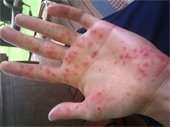
Hand, Foot and Mouth Disease GuidanceHand, foot and Mouth Disease (HFMD) may sound scary, but it is a typically mild illness. It does spread quickly in group settings, such as child cares and early learning programs. Symptoms usually include mouth sores, skin rash on hands and feet, and fever. HFMD is very common in children under the age of 5 years old, but can effect anyone. If you or a staff member suspects a child may be experiencing an illness, such as HFMD, refer the family to their medical provider - never try to diagnose an illness yourself. Symptoms usually last for about a week. Children can return to care when they: - are fever-free for at-least 24 hours, without the use of fever-reducing medications.
- have no uncontrolled drooling with mouth sores.
- can cover skin sores with clothing or an adhesive bandage.
- feel well enough to participate in classroom activities.
The best way to prevent the spread of germs and illness is frequent, high-quality hand washing with soap and water for at least 20 seconds. If soap and water are not available, use an alcohol-based hand sanitizer. Increasing air flow in the classroom by opening windows or increasing fresh air intake on HVAC systems can also be helpful. For additional information and an information sheet to share with families in the event of a case please see: English: Hand-Foot-Mouth-Disease (snohd.org) Spanish: Hand-Foot-Mouth-Disease-SPANISH (snohd.org) Additional information on HFMD and other illnesses is available from the Center’s for Disease Control and Prevention.
|
|
|
|
|
|
FREE Lead EDUCATION MATERIALS FOR FAMILIESDid you know that Washington State has the lowest blood lead testing rate in the entire country? Even children who are on Medicaid and are required to be tested at ages 12 and 24 months, or at least once by the time they are 6 years old, are not receiving a blood lead test. This means that there are likely many children who have high blood lead levels that have not been identified. There is no safe level of lead for children. The sooner that children with lead in their blood are identified, the sooner the source of lead can be identified and removed. The longer lead is in a child's body, the more damage it can cause to the brain, nervous system, and other organs. Snohomish County Health Department would like to bring informational packets to child care facilities. In these packets are colorful small brochures, available in a variety of languages, that can be sent home with each family. There is also information for the child care on ways to make your center or home lead-safe. The visit by our staff only takes about 15 minutes. To schedule a visit and get your packet, please send an email to shd.childcarehealth@co.snohomish.wa.us. |
|
|
|
|
|
ALERT - RECALLED ITEMSRecall: WanaBana Fruit Puree Pouches May Contain Elevated Levels of Lead and CHROMIUMAs of January 26, 2024, there have been 404 cases in 43 states of individuals with blood lead levels above the public health action level after eating WanaBana Apple Cinnamon Fruit Puree. The FDA is advising parents and caregivers not to buy or feed WanaBana apple cinnamon fruit puree pouches to children because the product may contain elevated levels of lead and chromium. Parents and caregivers of toddlers and young children who may have consumed WanaBana apple cinnamon fruit puree pouches should contact their child’s healthcare provider about getting a blood test. More information can be found here. There are a few other recently recalled items. Click on the link or image for more details. Keep informed of recalls by visiting the CPSC website at www.cpsc.gov regularly. OTHER RECALLED ITEMS
|
|
|
|
COVID-19 INFORMATION AND RESOURCESAll child care facilities are still required to report ALL cases of COVID to the Snohomish County Health Department through the link available on our website. Take a look at our Snohomish County Health Department webpage for COVID-19 resources for schools and child care. Choose the “Child Care (staff)” tab. The website contains current guidance for child cares and a simple pathway for reporting COVID-19 cases directly to the Washington State Department of Health (through an application called FONT). Please use the spreadsheet on our website when reporting case(s). A link for reporting through the FONT tool is available on the website. Guidance and assistance are available from the staff of the Child Care Health Outreach Program at the email address and phone number listed below: Email: shd.childcarehealth@co.snohomish.wa.us Phone: 425-252-5415
|
|
|
|
|
|
|
|
Free test kits for each family - Encourage families to have COVID tests available should their child develop respiratory symptoms. As of September 2023, each family was eligible to receive 4 free tests from the US government. An additional 4 tests per family were made available as of November 21, 2023. Families should go to https://www.covid.gov/tests to order theirs. Families who did not place an initial order can submit two requests. Free test kits for child cares - LIMITED SUPPLY REMAINING - Child cares can request COVID tests to share with families at no charge through the Snohomish County Health Department. To request your kits and discuss the pick-up process, you must send an email to shd.childcarehealth@co.snohomish.wa.us.
Tests are NOT available on a drop-in basis. Test kits can be picked up at our downtown Everett office or delivered to the child care facility. |
|
|
|
Safe Sleep: During IllnessThe American Academy of Pediatrics (AAP) has issued guidance on keeping infants safe during sleep when they are experiencing a stuffy nose related to illnesses such as a cold, flu, COVID-19 or RSV. According to the AAP (2024): - Infants should ALWAYS sleep on their back on a firm, even surface.
- Sleep space should be free of pillows, props, pads, blankets, stuffed animals or other soft materials.
Even when sick, infants should never be placed on an inclined surface or in containers as this can increase the risk for S.I.D.S. For more information on Safe Sleep for infants during Illness and other topics from the AAP : My baby has a stuffy nose. How can I help them sleep safely? - HealthyChildren.org
|
|
|
|
Speaker available for parent educationDoes your early learning program have parent education nights? Snohomish County Health Department has a speaker available to provide information on lead poisoning prevention at family education events. The majority of our availability is for online learning, although we do have some slots available for in-person trainings. Please contact us at shd.childcarehealth@co.snohomish.wa.us or 425-512-5249 to get more information. |
|
|
|
|
|
|
|
We appreciate your patience as we continue to update our courses to enhance your learning experience. Classes are being offered AT NO COST at this time. For questions about our online classes, contact our team at SHD.ChildCareHealth@co.snohomish.wa.us or via phone at 425.252.5415. |
|
|
|
This Month's Featured Classes
|
|
|
|
|
|
Childhood Lead Poisoning Prevention
Lead remains a problem in Washington State and Snohomish County. This course is designed to educate child care providers and staff on how to keep children and families safe from the harmful effects of lead. Did you know there is no safe level of lead? In this course you will learn where lead was historically used, where it is currently still found and simple steps you can take to protect children and families from the effects of lead poisoning.
Register Here |
|
|
|
|
|
Tiny Bites: Oral Health in the Child Care Setting
The most common chronic disease in children is tooth decay. This is especially true in underserved populations. This course will focus on the importance of dental health in children, pediatric oral health recommendations, and how to be an oral health advocate in the child care setting. Information and guidance is provided on nutrition, oral health practices, alternative oral health activities, and methods for toothbrushing in child care.
Register Here |
|
|
|
|
|
Lactation Feeding Friendly Child Care (LFE) We recognize that one of the barriers that families face when they return to work is how to continue to provide human milk to their child. Understanding the value of human milk for young children, we have created a program to recognize child care facilities that have taken specific steps to make their program a lactation feeding friendly environment (LFE). We are offering a lactation and feeding-friendly child care environment course to promote inclusivity and support for parents who wish to continue breastfeeding, ensuring that child care providers are knowledgeable and equipped to create a comfortable and accommodating environment for breastfeeding and bottle-feeding infants. By offering this course, we aim to empower child care providers with the necessary skills and understanding to meet the unique needs of lactating parents and their babies, fostering a nurturing and inclusive child care setting.
This program and course have been developed by the Snohomish County Health Department in partnership with the Washington State Department of Health (DOH), the Breastfeeding Coalition of Washington, and with the participation of King County Public Health.
Register Here |
|
|
|
Contact InformationSnohomish County Health Department
3020 Rucker Ave., Ste. 202, Everett, WA 98201
Email: SHD.ChildCareHealth@co.snohomish.wa.us
Program Phone: 425.252.5415
Website: http://www.snohd.org/238/Child-Care-Providers
Received this as a forward? Sign up for our newsletter by clicking here.
The Child Care Health Outreach Program staff are available to consult with you on these and other health, safety, and nutrition topics by phone, by email, or at your child care facility. |
|
|
|
|
|












 Share on Facebook
 Share on Twitter
 Share via Email
