The Child Care Health Newsletter Banner
Snohomish County Health Department Logo

August 2024  

Click here to visit our website  

Information banner about cinnamon applesauce recall and lead poisoning prevention

Click on the above image for more information about Childhood Lead Poisoning

FREE Lead EDUCATION MATERIALS FOR FAMILIES

There is no safe level of lead for children. Snohomish County Health Department would like to bring informational packets to child care facilities. In these packets are colorful, small brochures, available in a variety of languages, that can be sent home with each family. There is also information for the child care on ways to make your center or home lead-safe. The visit by our staff only takes about 15 minutes. To schedule a visit and get your packet, please send an email to shd.childcarehealth@co.snohomish.wa.us.

SPEAKER AVAILABLE FOR PARENT EDUCATION

Does your early learning program have parent education nights? Snohomish County Health Department has a speaker available to provide information on lead poisoning prevention at family education events. The majority of our availability is for online learning, although we do have some slots available for in-person trainings. Please contact us at shd.childcarehealth@co.snohomish.wa.us or 425-512-5249 to get more information. 

Protect Your Child's Future From Lead

Snohomish County Health Department is offering a no-cost video series on lead prevention for the community. This series consists of six short optional videos that share current information on childhood lead poisoning prevention. Share widely with staff and families.

Protect Your Child's Future from Lead 

A login and password are needed to access the host site.

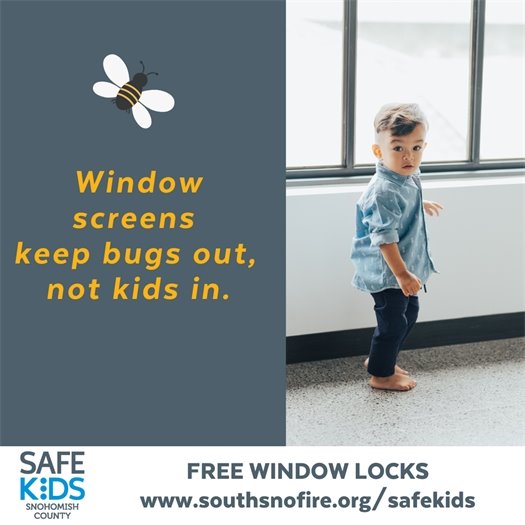
Young child standing next to a screened window. Text reads, "Window screens keep bugs out, not kids in" and "Free Window Locks - www.southsnofire.org/safekids"

Protect kids from Window Falls

Safe Kids Snohomish County and the Snohomish County Health Department Child Care Health Outreach program urge parents and caregivers of young children to take precautions as injuries from child window falls are at record-setting levels in Snohomish County. 

Here are some safety tips to prevent child window falls: 

  • Do not rely on window screens to prevent falls. 
  • Use window guards/locks that keep windows from opening more than 4 inches.
  • Move furniture such as cribs, desks, beds and tables away from windows.
  • Plant bushes and flower beds under windows to soften landing surfaces.
  • Actively supervise children at all times, especially around open windows.

WAC 110-300-0165 requires child care providers to:

  • ensure that windows within the reach of children only open up to three and one-half inches or have some barrier or preventive measure to discourage children from exiting through the window. The three and one-half inch opening does not apply to exit windows in family home early learning programs.
  • prevent children from walking into or through a glass door, window, or other glass barrier, by placing stickers or art work at the children's eye level on the glass.
  • not place cribs, play pens, bassinets, infant beds, and indoor climbing structures next to windows, to prevent harm from shattered glass, unless the window is made of safety glass.
  • make sure that window blinds and window coverings not present a strangulation risk.

We encourage you to share this information with families. Feel free to include it in a newsletter or post on a parent board. 

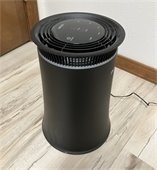
Photo of a portable HEPA air cleaner

Info about Air Cleaners

In the event of a smoke event, using an air cleaner is recommended. It is important to make sure that it is a type that will not create more of a hazard. Avoid those that produce ozone and make sure that the filter is cleaned/replaced regularly. 

The best type is one that is a high efficiency particulate air (HEPA) filter. The EPA has great information on air cleaners on their website, including a Guide to Air Cleaners in the Home and a Wildfire Smoke Factsheet on Indoor Air Filtration.

Washington State Department of Health also has some recommendations for choosing a portable air filter. https://doh.wa.gov/sites/default/files/2022-07/333-256.pdf 

Puget Sound Clean Air Agency has instructions on making a DIY air cleaner if you cannot find one or if you are looking for a less expensive option.  https://www.pscleanair.gov/525/DIY-Air-Filter

As with any electronic device in a child care environment, it should be positioned in a way that does not pose a hazard to the children. Generally you will want to run it continuously during a smoke event. Always follow manufacturer instructions.

For more information about choosing an air filter or portable air cleaner for your home, see the Wildfire Smoke Factsheet on Indoor Air Filtration and EPA’s Guide to Air Cleaners in the Home.

toddler aggression

Responding to Aggressive Behavior in Toddlers

Step 1: Observe & Consider Factors

  • Current life circumstances
    • Changes at home, physical illness, not enough sleep, etc.
  • Developmental stage
    1. What behaviors and responses are developmentally appropriate?
    2. Are activities and expectations developmentally appropriate?
      • Is the child frustrated with a difficult task?
      • Does the child need help with functional communication (appropriate expression of their needs and feelings)?
  • Temperament
    1. What is this child’s baseline?
  • Reflect on your own temperament and experiences.
    1. Maintain self-awareness.

Step 2: Respond Based on Understanding

  • Prioritize prevention strategies.
    1. Recognize patterns to identify helpful changes to environment and routine.
    2. Provide transition warnings.
  • Facilitate understanding of feelings and behavior.
  • Model appropriate communication and expression of feelings.
  • Strategies for Responding
    1. Model remaining calm, even if you are feeling frustrated.
    2. Recognize the child’s feelings and the goal behind their behavior.
    3. Communicate with words, gestures, and images.
    4. Offer appropriate alternatives to aggressive behavior.
    5. Redirect behavior or find an appropriate distraction.
    6. Provide coping strategies for emotion regulation.
    7. Suggest taking a break to allow time to return to baseline.

Step 3: Facilitate Learning

  • Point out consequences in an age-appropriate manner.
  • Collaboratively brainstorm better choices for next time.
  • Remind the child that they can always come to you for help.

If a child demonstrates aggressive behaviors that are reckless, high-intensity, seemingly unprovoked, are following a traumatic life event, and are interfering with their ability to have positive interactions, seeking out further support is recommended. A child’s pediatrician can make appropriate referrals for assessment or counseling services. Additional assessment and support may be available through the child’s school district. 

If a child in your care requires additional behavioral support or accommodations, an individual care plan must be in place. See:  WAC 110-300-0300: Individual Care Plan.

To access individual care plan templates and a thorough checklist created by Public Health Seattle and King County, see:  Care plans and authorization forms - King County, Washington.

Reference

Parlakian, R. (2016). Aggressive behavior in toddlers. ZERO TO THREE. https://www.zerotothree.org/resource/aggressive-behavior-in-toddlers/

National Breastfeeding Symbol

National Breastfeeding Month

World Breastfeeding Week (WBW) has been celebrated each year from August 1st-7th since its inception in 1992, in commemoration of the 1990 Innocenti Declaration.  The Innocenti Declaration was co-sponsored by the United States Agency for International Development and the Swedish International Development Authority.  It focuses on specific goals in order to achieve the desired result of protection, promotion, and support of breastfeeding, with a special focus on exclusive breastfeeding during the first 4-6 months postpartum.  

The 2024 WBW campaign is called “Closing the Gap: Breastfeeding Support for All” and highlights the need to improve breastfeeding support to address global and societal inequities around lactation.  The campaign includes 4 main goals: 1.) “Inform” people about inequalities around breastfeeding support and prevalence 2.) “Anchor” breastfeeding as an equalizer to close societal health care gaps 3.) “Engage” with people and organizations to increase collaboration and support of breastfeeding 4.) “Galvanize” attempt to reduce inequalities in breastfeeding support by focusing on vulnerable populations.  

www.worldbreastfeedingweek.org provides a wealth of information about how to ensure the success of the campaign, including taking an interactive pledge to participate in WBW 2024 and to share your planned activities.

The Snohomish County Health Department is committed to supporting breastfeeding year-round with a number of programs, including the Women, Infant, and Children (WIC) program, the First Steps program, as well as Lactation Friendly Feeding Environment (LFE) program.

The LFE program works to promote, protect, and support families breastfeeding goals when returning to work and while utilizing a child care center.  Child care centers have the opportunity to become certified as lactation friendly feeding environments, indicating their understanding of the importance of human milk and supporting the families providing it.  A detailed toolkit is available for child care centers interested in becoming certified (https://www.snohd.org/DocumentCenter/View/13385/Building-Blocks-to-a-Lactation-Friendly-Feeding-Child-Care). For more information about the LFE program and how to become recognized, please email lactation@co.snohomish.wa.us.

Please visit https://www.snohd.org/218/breastfeeding for more information about all Snohomish County breastfeeding support programs.

Additional local breastfeeding support organizations include:

The Lactation Coalition of Snohomish County at www.breastfeedingsnoco.org

The Washington State Lactation Collaborative at https://www.walactation.org

Happy World Breastfeeding Week!  

COVID germ

COVID-19 INFORMATION AND RESOURCES

Remember to report any cases of COVID that occur at your child care via our website.

Take a look at our Snohomish County Health Department webpage for COVID-19 resources for schools and child care. Choose the “Child Care (staff)” tab.

The website contains current guidance for child cares and a simple pathway for reporting COVID-19 cases directly to the Washington State Department of Health (through an application called FONT). Please use the spreadsheet on our website when reporting case(s). A link for reporting through the FONT tool is available on the website.

Guidance and assistance are available from the staff of the Child Care Health Outreach Program at the email address and phone number listed below:

Email:  shd.childcarehealth@co.snohomish.wa.us

Phone: 425-252-5415

Image of COVID test

Free test kits for child cares - LIMITED SUPPLY REMAINING - Child cares can request COVID tests to share with families at no charge through the Snohomish County Health Department. To request your kits and discuss the pick-up process, you must send an email to shd.childcarehealth@co.snohomish.wa.us.
  
Tests are NOT available on a drop-in basis. Test kits can be picked up at our downtown Everett office or delivered to the child care facility.

InteliSwab COVID-19 Rapid Test - Shelf Life Extension (fda.gov) For expiration date extensions on COVID-19 test kits from the FDA. 

Child Care Health & Safety Classes Logo
instructions for learning portal
LMS
learning portal

We appreciate your patience as we continue to update our courses to enhance your learning experience. Classes are being offered AT NO COST at this time. 

For questions about our online classes, contact our team at SHD.ChildCareHealth@co.snohomish.wa.us or via phone at 425.252.5415.

This Month's Featured Classes

Stress Chalkboard

Stress Management for Child Care Providers

This class identifies stressors child care providers experience and suggests ways to manage these stressors. In this course, you will learn about the impacts of personal stress, job stress, burnout, and secondary trauma and how to combat these stressors with coping skills and self-care practices.

Register Here

Child chipping paint off a window frame

Childhood Lead Poisoning Prevention


Lead remains a problem in Washington State and Snohomish County. This course is designed to educate child care providers and staff on how to keep children and families safe from the harmful effects of lead. Did you know there is no safe level of lead? In this course you will learn where lead was historically used, where it is currently still found and simple steps you can take to protect children and families from the effects of lead poisoning.


Register Here

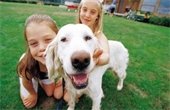
Two girls and a dog

Preventing Diseases from Animals in Child Care Settings 

Animal related experiences in the child care setting can mean additional health and safety concerns to consider. In this self-paced correspondence class you will learn about the best practice recommendations for keeping a class pet, for participating in animal related field trips and for having animal guests. Special focus will be on how to minimize illness, injury and allergy risks.


Register Here

Contact Information

Snohomish County Health Department
3020 Rucker Ave., Ste. 202, Everett, WA  98201

                                                                                     
Email: SHD.ChildCareHealth@co.snohomish.wa.us

Program Phone:  425.252.5415

Website:  http://www.snohd.org/238/Child-Care-Providers

Received this as a forward? Sign up for our newsletter by clicking here.

The Child Care Health Outreach Program staff are available to consult with you on these and other health, safety, and nutrition topics by phone, by email, or at your child care facility. 

Share on Facebook
Share on Twitter
Share via Email

Snohomish County Health Department
3020 Rucker Ave., Everett, Washington

Powered by
CivicSend - A product of CivicPlus