The Child Care Health Newsletter Banner
Snohomish County Health Department Logo

September 2024  

Click here to visit our website  

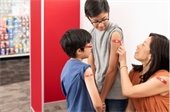
Family received vaccination

Updated Vaccine Recommendations 

In June, 2024, Centers for Disease Control and Prevention (CDC) updated its recommendations for vaccination against COVID-19, flu, and respiratory syncytial virus (RSV).

CDC recommends everyone ages 6 months and older receive an updated 2024-2025 COVID-19 vaccine when these vaccines are available later this year. The 2024-2025 vaccine is formulated to protect against currently circulating variants of COVID-19 and will protect people from the potentially serious outcomes of COVID-19 illness this fall and winter. 

Vaccination continues to remain the safest and most dependable strategy to build immunity and protection against severe illness, hospitalization, and death caused by COVID-19.

CDC recommends everyone 6 months of age and older, with rare exceptions, receive an updated 2024-2025 flu vaccine to reduce the risk of influenza and its potentially serious complications this fall and winter. Most people need only one dose of the flu vaccine each season. While CDC recommends flu vaccination as long as influenza viruses are circulating, September and October remain the best times for most people to get vaccinated.

The updated 2024-2025 flu vaccine will be trivalent and will protect against H1N1, H3N2 and a B/Victoria lineage virus.

For staff, who have not already received an RSV vaccine and are age 60 or older, CDC now recommends a single dose of RSV vaccine as listed below:

  • Everyone ages 75 and older.
  • People ages 60–74 who are at increased risk of severe RSV, meaning they have certain chronic medical conditions, such as lung or heart disease.

The best time to get vaccinated is in late summer or early fall, before RSV usually starts to spread in the community. However, eligible adults can get an RSV vaccine at any time.


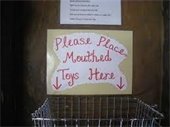
Bin for toys that have been placed in the mouth to be sanitized

Slow the spread of germs in your child care.

Mouthing objects is an important part of feeding and speech development for children under 1-year-old. This is one way that young children develop oral-sensory awareness in their mouths, as they explore their environment. When toys and other objects have been mouthed in the classroom, they must be removed until they can be cleaned and sanitized. More information can be found here WAC 110-300-0241: Cleaning Schedules. This can be true in both the infant, toddler, and waddler classrooms.

Having a designated container for mouthed toys is a great way to be sure you are keeping the children in your care safe and healthy; these bins help to reduce the spread of germs which is important, especially during flu season or illness outbreak. Keep a clearly labeled bucket, bin, basket, or plastic container easily accessible and out of reach of children. When a toy or other object has been mouthed, put it in the designated container until it can be cleaned and sanitized, allow to dry overnight.

Cleaning and sanitizing the mouthed toys can be implemented as part of the end-of-day routine. If time does not allow you to do this chore daily, other toys can be rotated into the classroom throughout the week as mouthed toys are removed. Rotating toys can also increase children’s interest and even spark their imaginations.

Narcan/ Naloxone can save a life!

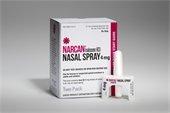
narcan can save a life

Did you know that in 2023, more than 130 Snohomish County residents including infants and children overdosed on opioids (heroin and prescription).

Fentanyl is a lab made opioid that is up to 100 times stronger than morphine. 

There is an increase of Fentanyl use and overdoses in Snohomish County.

Opioids are prescribed to treat pain after surgery or some procedures; but they can cause respiratory depression, drowsiness, nausea and vomiting, as these medications slow everything in the body down.

Fentanyl can easily be masked as prescription medications (Vicodin or Percocet). Illegal substances, such as heroin and cocaine may contain Fentanyl in varying amounts. It is important to be aware and carry Naloxone! This medication is given when an opioid overdose happens or has possibly happened. According to the American Academy of Pediatrics (AAP), Narcan can be safely given to infants and children. It can reverse an overdose & provide crucial time for emergency medical responders to arrive to render further aid.

Do you have Naloxone (a.k.a. Narcan) in your first aid kit?   
Did you know that individuals who reside in Washington State can order Naloxone for FREE & have it mailed directly at no cost to them? Just click the link below and complete
the brief form.

Order Free Narcan Here. 

For more information on the use of Narcan in children from the AAP: See this link

Information banner lead poisoning prevention

Click on the above image for more information about Childhood Lead Poisoning

American Academy of Pediatrics lead website

Lead FAQ for Famlies

Because of the harms that lead can cause to young children, the American Academy of Pediatrics (AAP) supports widespread lead screening. They have put together a website with common questions asked by families about lead poisoning. Here is a link to their website: https://www.healthychildren.org/English/safety-prevention/all-around/Pages/lead-exposure-and-children-faqs-for-families.aspx. We encourage you and your families to check it out.

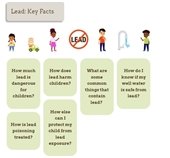
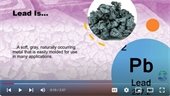
Image from Community Lead Poisoning Prevention Information Class

PROTECT YOUR CHILD'S FUTURE FROM LEAD: 

A COMMUNITY LEAD AWARENESS SERIES

Snohomish County Health Department is offering a no-cost video series on lead exposure prevention for the community. This series consists of six short (less than 5 minutes) videos that share current information on childhood lead poisoning prevention. Share widely with staff and families. The video series is now available on SCHD's Youtube page.

FREE Lead EDUCATION MATERIALS FOR FAMILIES

There is no safe level of lead for children. Snohomish County Health Department would like to bring informational packets to child care to share information with families and the community. In these packets are colorful, small brochures, available in a variety of languages, that can be sent home with each family. There is also information for the child care on ways to make your center or home lead-safe. The visit by our staff only takes about 15 minutes. To schedule a visit and get your packet, please send an email to shd.childcarehealth@co.snohomish.wa.us.

COVID germ

COVID-19 INFORMATION AND RESOURCES

Remember to report any cases of COVID that occur at your child care via our website.

Take a look at our Snohomish County Health Department webpage for COVID-19 resources for schools and child care. Choose the “Child Care (staff)” tab.

The website contains current guidance for child cares and a simple pathway for reporting COVID-19 cases directly to the Washington State Department of Health (through an application called FONT). Please use the spreadsheet on our website when reporting case(s). A link for reporting through the FONT tool is available on the website.

Guidance and assistance are available from the staff of the Child Care Health Outreach Program at the email address and phone number listed below:

Email:  shd.childcarehealth@co.snohomish.wa.us

Phone: 425-252-5415

Image of COVID test

The Snohomish County Health Department does not currently have any more tests available to hand out. Starting in late September, the federal government will again offer 4 COVID tests per family through the US mail. Have staff and families keep an eye on this website towards the end of the month to see when they become available: www.covidtests.gov.

Child Care Health & Safety Classes Logo
instructions for learning portal
LMS
learning portal

We appreciate your patience as we continue to update our courses to enhance your learning experience. Classes are being offered AT NO COST at this time. 

For questions about our online classes, contact our team at SHD.ChildCareHealth@co.snohomish.wa.us or via phone at 425.252.5415.

This Month's Featured Classes

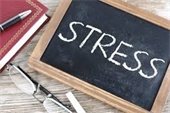
Stress Chalkboard

Stress Management for Child Care Providers

This class identifies stressors child care providers experience and suggests ways to manage these stressors. In this course, you will learn about the impacts of personal stress, job stress, burnout, and secondary trauma and how to combat these stressors with coping skills and self-care practices.

Register Here

Child chipping paint off a window frame

Childhood Lead Poisoning Prevention


Lead remains a problem in Washington State and Snohomish County. This course is designed to educate child care providers and staff on how to keep children and families safe from the harmful effects of lead. Did you know there is no safe level of lead? In this course you will learn where lead was historically used, where it is currently still found and simple steps you can take to protect children and families from the effects of lead poisoning.


Register Here

Two girls and a dog

Preventing Diseases from Animals in Child Care Settings 

Animal related experiences in the child care setting can mean additional health and safety concerns to consider. In this self-paced correspondence class you will learn about the best practice recommendations for keeping a class pet, for participating in animal related field trips and for having animal guests. Special focus will be on how to minimize illness, injury and allergy risks.


Register Here

Contact Information

Snohomish County Health Department
3020 Rucker Ave., Ste. 202, Everett, WA  98201

                                                                                     
Email: SHD.ChildCareHealth@co.snohomish.wa.us

Program Phone:  425.252.5415

Website:  http://www.snohd.org/238/Child-Care-Providers

Received this as a forward? Sign up for our newsletter by clicking here.

The Child Care Health Outreach Program staff are available to consult with you on these and other health, safety, and nutrition topics by phone, by email, or at your child care facility. 

Share on Facebook
Share on Twitter
Share via Email

Snohomish County Health Department
3020 Rucker Ave., Everett, Washington

Powered by
CivicSend - A product of CivicPlus