|
|
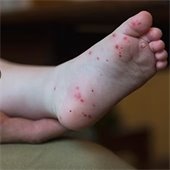
Rashes in Child CareRash illnesses can be tricky. Some require exclusion, and some do not. Some are reportable to the health department, and others are not. If a child in your care has a rash, your licensing regulations require the child to be excluded. The WAC states, "an ill child, staff member, or other individual must be sent home or isolated from children in care if the ill individual has a rash not associated with heat, diapering, or an allergic reaction." The family should be encouraged to take their child to a health care provider to be evaluated and tested if appropriate. With a medical evaluation, you will know the right steps to take and when the child is ok to return. You can find fact sheets about a few of these rash-type illnesses on our website and at the CDC. By learning more, you can know when a child can return once you are informed of the diagnosis.
|
|
|
|
Outdoor Play in Fall and WinterWith fall and winter comes rainy and colder weather. But just because the weather is cooler, does not mean that children should be kept inside. Except in the most extreme weather (such as lightning, strong windstorms, or very hot or cold temperatures), children need to be taken outside at least once per day according to WAC 110-300-0360. Infants (as tolerated) and toddlers should have 20 minutes of outside time for every 3 hours they are in care and preschool and older need to have 30 minutes outside for every 3 hours they are in care. Outdoor playtime is important year-round! By taking children outside, children and staff get the opportunity to experience nature and learn about the weather firsthand, have a change in scenery and sensory activities, and exercise which is important for healthy habits, obesity prevention, and gross-motor development. Being outside also allows one to breathe in fresh, clean air which can be refreshing and invigorating. It also provides an opportunity to ventilate classrooms by opening windows for a few minutes. Children should be dressed appropriately for the weather so they can enjoy the daily outdoor activities. Children’s body surface to weight ratio is bigger than adults, causing them to lose heat more quickly. Parents should dress children appropriately. Here are some tips to pass along to families. - For cold, damp weather, dress children in a warm, water repellant coat with a hood or a cap and rubber boots
- For cold, dry weather, children should have a warm coat with hood or wool cap, sweater, and mittens or gloves.
- For snowy weather, include all items in the bullet above plus snow pants if possible, extra mittens or gloves, and make sure ears are covered.
- Include a complete change of clothes for children to change into should they find a puddle to splash in. The child care should have extra clothes available in case a parent forgets to send some. A trip to the thrift store can help augment your supply.
- Dress children in layers of medium weight clothing to trap body heat.
- Clothing should be dry and clean to provide maximum warmth.
- Remember to communicate clearly to parents that you will go outside daily despite rain or light snow.
To make sure that outdoor play in fall and winter weather is safe and fun, child care providers should periodically check the skin of young children to make sure they feel warm. Watch children to make sure they keep their protective clothing on. Find some areas outside that provide protection from the wind. Wind and temperature can both affect how cold it feels outside. Click here to download a chart of temperatures and wind chill factors for child care facilities.
|
|
|
|
|
|
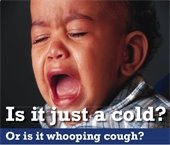
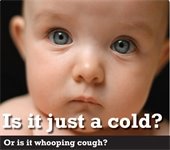
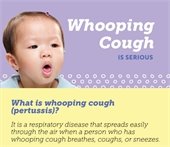
Watch out for Whooping CoughAs mentioned in our most recent health alert, sent out on November 13, 2024, Washington State is experiencing an increase in the number of whooping cough cases. Whooping cough is also called pertussis. To hear what whooping cough sounds like, here is a link from the US FDA. Here are some things that child care providers should be aware of: - Child cares must report all cases of pertussis (whooping cough) to Snohomish County Health Department at 425.252.5415 or 425.339.3503.
- Encourage all staff who work with infants to receive a Tdap booster vaccine.
- Review children's immunization records (CIS forms) to make sure they are up to date on their DTaP vaccine. Make sure that your list of all children who are exempt from DTaP is current, stored per HIPAA requirements, and easy to access should a case arise in the child care.
- Share information with families. At the beginning of this article are two posters from Snohomish County Health Department (poster) and a brochure from the Washington State Department of Health available in several languages (English, Spanish, Russian, Vietnamese). Consider including these in a newsletter or posting on a parent board or classroom door.
- Learn more about pertussis/whooping cough (Snohomish County Health Dept., CDC)
If you have any questions about pertussis, vaccines, or other health or safety issues, please contact the Child Care Health Outreach Program ChildCareHealth@co.snohomish.wa.us or by calling (425) 252-5415. |
|
|
|
|
|
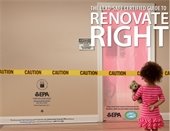
HOME OR Building older than 1978? Make sure you Know the Law.If your child care is in a building or home that was built before 1978, there are some specific rules that you need to know before you do any remodeling, painting, or other work. Unless you know through testing that the paint does not contain lead, you must assume that it does. In October 2024, the U.S. Environmental Protection Agency (EPA) issued an enforcement alert for the lead Renovation, Repair, and Painting (RRP) Rule. Any renovation, repair, or painting project in a pre-1978 home or building can easily create dangerous lead dust. Lead-contaminated dust is one of the most common causes of elevated blood lead levels in children, and even low levels of exposure can be harmful. The RRP Rule requires that projects that disturb lead-based paint in homes, child care facilities, and preschools built before 1978 be performed by lead-safe certified contractors. You can find a certified contractor by visiting the Washington State Department of Commerce website. To learn more, you can download a copy of the EPA's Renovate Right booklet by clicking on the image above or on this link - https://www.epa.gov/sites/default/files/documents/renovaterightbrochure.pdf
If you would like to receive a paper copy of the brochure, please send an email to childcarehealth@co.snohomish.wa.us.
|
|
|
|
Cinnamon product recalls continue If you have or use cinnamon in your child care program, please check to make sure that it has not been recalled due to lead. A new product called Super Cinnamon Powder, which is made by IHA Beverage has been recalled because it has the potential to be contaminated with lead. More information about this recall and other recalled cinnamon products can be found on the FDA's website. |
|
|
|
COVID-19 Information and ResourcesRemember to report all cases of COVID that occur at your child care via our website. Take a look at our Snohomish County Health Department webpage for COVID-19 resources for schools and child care. Choose the “Child Care (staff)” tab. The website contains current guidance for child cares and a simple pathway for reporting COVID-19 cases directly to the Washington State Department of Health (through an application called FONT). Please use the spreadsheet on our website when reporting case(s). A link for reporting through the FONT tool is available on the website. Guidance and assistance are available from the staff of the Child Care Health Outreach Program at the email address and phone number listed below: Email: childcarehealth@co.snohomish.wa.us Phone: 425-252-5415
|
|
|
|
|
|
The Snohomish County Health Department does not currently have any more tests available to hand out. The federal government is again offering 4 COVID tests per family through the US mail. Please share the following website with staff and families and have them order kits to keep at home. www.covidtests.gov. |
|
|
|
|
|
|
|
We appreciate your patience as we continue to update our courses to enhance your learning experience. Classes are being offered AT NO COST at this time. For questions about our online classes, contact our team at ChildCareHealth@co.snohomish.wa.us or via phone at 425.252.5415. |
|
|
|
This Month's Featured Classes
|
|
|
|
|
|
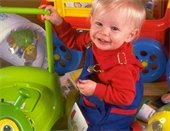
Injury Prevention: Toy Safety
In addition to providing children with fun and enjoyment, toys help them develop skills, test their abilities, engage their imagination, and learn. Unfortunately, many children are injured every day from toys that are supposed to be fun. This course will focus on preventing injuries from toys in child care settings. Register Here |
|
|
|
|
|
Stress Management for Child Care Providers This class identifies stressors child care providers experience and suggests ways to manage these stressors. In this course, you will learn about the impacts of personal stress, job stress, burnout, and secondary trauma, and how to combat these stressors with coping skills and self-care practices. Register Here |
|
|
|
|
|
Childhood Lead Poisoning Prevention
Lead remains a problem in Washington State and Snohomish County. This course is designed to educate child care providers and staff on how to keep children and families safe from the harmful effects of lead. Did you know there is no safe level of lead? In this course you will learn where lead was historically used, where it is currently still found, and simple steps you can take to protect children and families from the effects of lead poisoning.
Register Here |
|
|
|
Contact InformationSnohomish County Health Department
3020 Rucker Ave., Ste. 202, Everett, WA 98201
Email: ChildCareHealth@co.snohomish.wa.us
Program Phone: 425.252.5415
Website: http://www.snohd.org/childcare
Received this as a forward? Sign up for our newsletter by clicking here.
The Child Care Health Outreach Program staff are available to consult with you on these and other health, safety, and nutrition topics by phone, by email, or at your child care facility. |
|
|
|
|
|










 Share on Facebook
 Share on Twitter
 Share via Email
