Employee Health Policies and ReportingMany people get sick each year from food. The Washington State Department of Health has determined that many cases of illness could be prevented by three main things: - Proper handwashing - Washing hands the right way, for the right amount of time, will remove the germs that can be so harmful. Make sure that every employee is using soap and warm water and scrubbing their hands for 10-15 seconds each time they wash.
- No bare hand contact - Avoiding bare hand contact with ready to eat foods will prevent the spread of germs from a food worker’s hands to the food they are preparing. Make sure that every employee is using some type of barrier, such as gloves, utensils or deli tissue, when working with ready to eat foods.
- Excluding ill workers - Removing or excluding workers when they are ill helps to keep the germs out of the establishment. Make sure that employees understand when and why they should stay home. The Snohomish County Health Department has created Restriction and Notification of Ill Food Workers posters and employee signature handouts to help train employees. They are all located on our Educational Resources page.
Operators (PIC / Manager / Owner) of food establishments must notify the Snohomish County Health Department if a food worker has jaundice, or a diagnosed illness that can be transmitted to other people through food. This may include but is not limited to Norovirus, Hepatitis A virus, Salmonella bacteria, Shiga-toxin producing E. coli (STEC) bacteria, Campylobacter bacteria. If you need to report employee illness to the Health Department or have questions, please email the Food Safety Program. All food employees with vomiting or diarrhea (loose stool) should be excluded from work until they are at least 24-hours free of symptoms, or 48-hours free of symptoms for suspected or diagnosed norovirus. For more information on food employee health policies and what to expect if an employee is diagnosed, i.e. tests positive for a notifiable illness, visit our Food Illness Prevention and Resources page.
|
|
|
|
Flood and Power Outage ResponseThere are several emergency situations where the facility must close and notify the Snohomish County Health Department. These are considered Imminent Health Hazards (IHH) and are defined as a significant threat or danger to public health that requires an immediate correction or an establishment to close and stop serving food to prevent injury. In most cases, the facility must have a facility inspection to provide written approval from the Health Department before reopening. This article will focus on floods and power outage. Here are some steps to take when experiencing these emergencies. FLOODS - When floods happen in a facility, food can be contaminated with bacteria from flood waters and there can be damage to the food storage and preparation areas, which is why facilities must immediately close. Once floodwaters have receded and you would like to reopen: - Verify that hot and cold water is available for handwashing and dishwashing.
- Verify all equipment works correctly (refrigeration, hot holding, cooking, ventilation).
- Foods that are not stored in sealed, air-tight packaging must be thrown away if exposed to flooding. Refrigerators should not be considered airtight, as water can enter through the gaskets and exhaust vents.
- Discard all single service items in the flood zone that are not in sealed, airtight containers, such as napkins, to-go containers, cups, cutlery and straws.
- All food contact surfaces must be disinfected, washed, rinsed, and sanitized before using again.
- All non-food contact surfaces exposed to flooding and contamination during the event must be disinfected before food preparation resumes. This includes all affected floors, walls, ceilings, vent hoods, exposed pipes, and floor drains.
- Obtain approval from the local utility and building departments.
- Call or email the Snohomish County Health Department to see if a pre-opening inspection or Plan Review is required.
POWER OUTAGE – Loss of electricity for a long amount of time means that Time/Temperature Control for Safety (TCS) foods are not being kept at the temperatures they need to prevent the growth of bacteria. Right when the power goes out - Close the facility.
- Use a thermometer to temp the TCS foods:
- PHF that is at or below 41°F Keep cold.
- PHF that is between 42°F -135°F Throw away.
- Add bags of ice to refrigerators and freezers if possible.
- Keep refrigerator and freezer doors CLOSED after you temp foods to keep them as cold as possible.
When the power comes back on - Throw away any TCS foods above 41°F.
- If you do not know the time the power went out, throw the food away. When in doubt, throw it out!
- Frozen TCS foods should be thrown away if they have thawed, and their temperature cannot be verified to have remained below 41°F.
If you have any questions, please call the Snohomish County Health Department Food Safety team voicemail line at 425-339- 8730 or email Food.Safety@snohd.org.
|
|
|
|
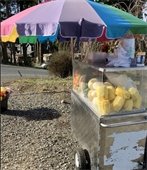
Public Messaging Regarding Unpermitted Carts and Stands in Snohomish CountyThe Snohomish County Health Department is aware of and have responded to several complaints involving unpermitted food carts and stands resulting in cease-and-desist closures by the Food Safety inspection team. The department has made multiple attempts to speak with the operators of these carts and stands about the required food business permits and how to get one. Unfortunately, these unpermitted operations are continuing to sell food without a permit. Recently, the number of unpermitted carts and stands at street-side locations has significantly increased. We have even started to see illness reports from those who purchased food from these unpermitted food stands. Similar operations are appearing elsewhere in the region, including in Portland and Seattle. Often, the carts and stands are transported to the location in unmarked vans. As an additional response, the health department has recently posted information about these unpermitted carts and stands as a warning to the public. The information also encourages the public to only purchase food from permitted food carts, event vendors, and restaurants. You can find the Be Aware of Unpermitted Food Carts and Stands article on our main webpage.
|
|
|
|
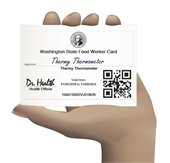
IN-PERSON classes no longer offeredDue to the lack of demand, we no longer offer in-person food worker card classes at the Snohomish County Health Department. Most of our community uses the online class option to take the class and test and print their food worker card. If you don’t have access to a computer, we suggest your local library as an option. If you don’t have access to a printer, you can take the class and test online and then call 425-339-5250 or come to our office and we can print it. You can also pay for the card over the phone or in our office if you do not want to pay for the card online.
|
|
|
|
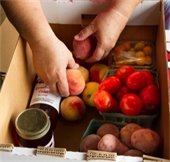
Food donationFor those operations that have been considering donating surplus food to food banks or donor kitchens in 2025, we have created a Surplus Food for Donation form. This form will help you organize the process. It focuses on all the areas where food safety might be a concern so that you can think of issues ahead of time and keep that food safe. Here are the suggested steps to take to begin the donation process: - Contact your inspector or email food.safety@snoco.org with your Surplus Food for Donation form so that an environmental health specialist can help you to ensure the plan can be approved.
- Partner with your local hunger relief organizations to see if they can safely accept your donations and distribute them effectively.
- Make sure that food is packaged securely to prevent contamination and is transported from your facility in a clean vehicle with temperature control to keep the food at safe temperatures throughout the donation process.
You can learn more about safe food donation requirements on our webpage: Food Donation | Snohomish County Health Department, WA.
|
|
|
|
Keep Fats, Oils, and Grease out of Storm DrainsFats, oils, and grease (FOG) from food preparation can build up in sewer pipes and cause costly blockages and sewage overflows. Never pour oil or grease down a drain or into a catch basin. It is important to maintain your onsite grease trap and grease interceptor as required by your local city. If you are collecting used oil for recycling, make sure to keep the oil bin clean and away from storm drains. - Do not power wash dumpsters. Properly dispose of garbage and sweep any debris around dumpster.
- Grease filters should not be washed outside. Wash all hood filters in a combination sink, mop sink or dishwasher.
- Mats should not be washed near a storm drain. Wash all kitchen floor mats indoors near a floor drain or utility sink. No wash or dirty water should ever go down a storm drain. Dispose of all water used for washing in a utility sink or indoor floor drain. Storm drain water will eventually enter streams and lakes and we want that water to remain clean. “ONLY RAIN DOWN THE DRAIN”.
- When recycling cooking oil, do not overload the bucket and use a caddy to help transport the cooking oil to prevent accidental spills. If you spill oil, clean it up immediately with kitty litter or absorbent towels. Place the used kitty litter or absorbent towels into a bag to prevent leakage, then put the bags in the trash. Maintain a regular pickup schedule with the oil company.
The Pollution Prevention Assistance program provides technical assistance and educational services to help local small businesses prevent stormwater contaminants and hazardous waste from entering our waterways. They will meet with your establishment to evaluate current activities and practices. They will discuss concerns, observations, solutions, and work directly to help solve common challenges around dangerous wastes, stormwater, solid waste, and spill prevention. If you would like to learn more about this program, call 425.339.5250 or email PPA Technical Assistance.
|
|
|
|
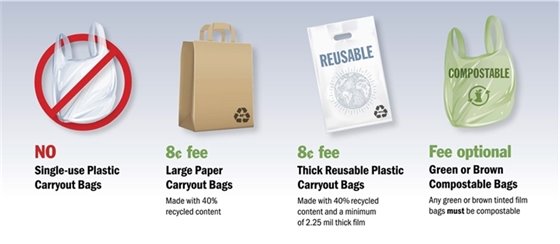
Avoid single-use plastic carryout bagsSingle-use plastic bags are banned in Washington. Businesses may provide alternatives, like bags that are reusable, compostable, or made of paper. They can also offer customers used boxes or go bag-free. Washington's single-use plastic bag ban started in 2021. It reduces pollution by prohibiting single-use plastic carryout bags and charging a fee for acceptable bags. For details about the law, printable flyers in 17 languages, and a list of acceptable alternatives, visit the plastic bag ban webpage or email bagban@ecy.wa.gov. |
|
|
|
|
|
Notify MeSign up to receive this newsletter using the Notify Me page. |
|
|
|
|
|



 Share on Facebook
 Share on Twitter
 Share via Email
