|
|
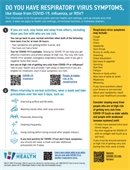
COVID-19 Reporting and exclusion GuidelinesGearing up for respiratory virus season or wondering what to do if a child tests positive for COVID-19? REPORTING Reporting is still required. Child care facilities in Snohomish County must report: - All cases of COVID diagnosed by a medical provider or laboratory
- Outbreaks (5 or more cases or 20% of a group)
Please utilize Snohomish County Health Department's reporting form when reporting on the above scenarios. Individual cases identified through at-home testing are not required to be reported, but child care facilities are strongly encouraged to contact the Child Care Health Outreach team for guidance, resources, and current best practices (email: childcarehealth@co.snohomish.wa.us or 425-252-5415). EXCLUSION GUIDELINES We are currently following the Washington DOH Guidelines for what to do when you are sick with COVID-19. For additional information on these guidelines please contact the Child Care Health Outreach Program. If a child or staff member tests positive for COVID-19 or another respiratory virus OR has respiratory virus symptoms that are not better explained by another cause, follow CDC Guidance for staying home and away from others; this includes people you live with who are not sick. A child/staff member can return to child care when BOTH of the following have been true for at least 24 hours: - Symptoms are getting better overall
- Fever-free (and not using fever-reducing medication)
Please note: People with COVID-19 are often contagious for 5-10 days after their illness begins. When returning to child care and normal activities, wear a mask if possible and take added precautions for the first 5 days upon return. Child cares are required to follow the information written in their health policy, where you may choose to have policies stricter than the state guidelines (examples include requiring exclusion from child care for 5-7days, wearing a mask upon return for the next 5 days, requiring a negative COVID test before returning). Please review your health policy to ensure you are following your current standards. If after reviewing, you would like the Health Department to review and sign your health policy, please utilize our center, family home, or school-age template and email it to us at childcarehealth@co.snohomish.wa.us for further information.
|
|
|
|
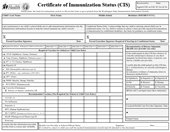
SIGN UP BY AUgust 15thImmunization Tracking Made Easier . . .but SIgn UP SOON! Child cares are required to track children's immunizations and submit an annual immunization report to the Washington State Department of Health (WaDOH) each November. The Washington State Immunization Information System (WAIIS) has a web-based school and child care immunization module that is free, secure, and easy to use for child care providers. Previously, this module was only accessible if you contracted with a nurse, but now it is available to all child cares. Once you are granted access, you can see the immunization records that are entered by health care providers for the children in your care. This module: - is a tracking system for childhood immunizations and exemptions,
- allows child cares to access provider-verified immunization data,
- saves staff time in entering data and finding missing immunizations, and
- gives child cares access to a roster showing each child's immunization status, out-of-compliance reports, printable parent letters for children missing immunizations, and allows quick identification of vulnerable children during a disease outbreak.
|
|
|
|
Providers who are using this system do not need to fill out the annual immunization report for WaDOH. Due to a decrease in staffing, WaDOH will pause onboarding new child cares for a period of time from mid-August through December of this year. If you are interested in signing up for access, the deadline to do so is August 15, 2025. You can find more information and instructions on how to sign up and complete the information sharing agreement form at www.doh.wa.gov/SchoolModule.
|
|
|
|
from Department of Children, Youth & Families to share with Families
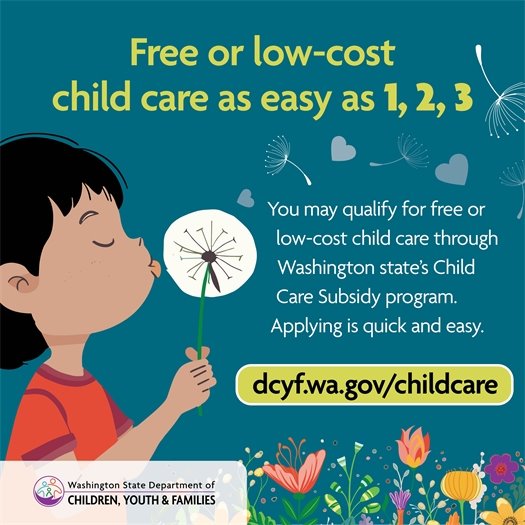
The Washington State Department of Children, Youth & Families (DCYF) has put together a toolkit to help spread the word to families about free and low cost child care options. You can access the flyers, social media posts and more at www.dcyf.wa.gov/childcare/toolkit. To learn more about the Working Connections Child Care Subsidy Program go to www.dcyf.wa.gov/childcare or call 844-626-8687. |
|
|
|
|
|
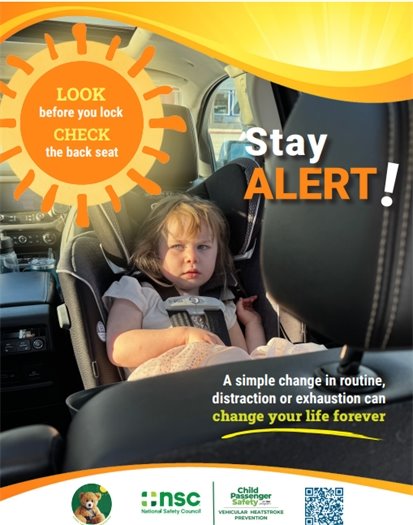
Protect Children from Hot carsHelp spread the word to families. We may not think that the temperatures get hot enough here in western Washington, but even when the temperature is in the 70s, a car can still get so hot that a child can get heat stroke. Never leave a child in a car unattended. And make it a habit to always look in the back seat before exiting the car. Here is a poster for you to put up at your child care. For more information, visit https://www.noheatstroke.org/. |
|
|
|
|
|
Here are a few additional sun safety tips:- Minimize sun exposure during the peak hours of 10am to 4pm. This is when the sun's UV rays are the strongest. Plan your outside time in the early morning or late afternoon.
- Use shaded areas, wide-brim hats, sunscreen, and sun-protective clothing to prevent sunburns.
- You can check the UV index (or strength of the sun's UV rays) on the EPA's website. The use of sunscreen is recommended when the UV index is above 3.
- Choose a broad-spectrum sunscreen that protects against UVA and UVB and has an Sun Protection Factor (SPF) of 15 or higher.
- When using sunscreen, make sure that you have parent permission, wash hands or use gloves between children, apply 30 minutes before going outside, even if it is cloudy. Sunscreen should be used for children over 6 months old. Reapply sunscreen if out in the sun for more than 2 hours or if engaging in water activities.
- Drink plenty of water to stay hydrated and take breaks from physical activity when it is hot.
You can get more information from the following websites: Centers for Disease Control and Prevention (CDC) | Sun Safety Facts, Environmental Protection Agency (EPA) | Sun Safety Tips, American Academy of Pediatrics | Sun Safety, CDC | About Heat and Your Health, Washington State Department of Health (WaDOH) | Hot Weather Precautions | Snohomish County | Extreme Heat and Cooling Centers |
|
|
|
Department of Children, Youth, and Families early childhood complex needs trainingsBack-to-School SeriesThe Washington State Department of Children, Youth, and Families (DCYF) is offering trainings to support childcare workers who care for young children with complex needs. These trainings will be facilitated by the UW Haring Center and focus on preparing providers for the upcoming school year. All trainings are FREE and will be held online via Zoom. In-Service (STARS) hours will be offered for ALL trainings. This is not eligible for clock hours. Topics: Designing classroom routines, transitions, and schedules; creating supportive learning environments; classroom management; teaming & collaboration; inclusive large groups; supporting multilingual learners Target Audience: Early childhood providers (ages birth-5 years)
Training Dates: Refer to the flyer for details on topics, dates, and times. Please note that all times listed are in Pacific Time (PT). Training Languages: Trainings are offered in English, Spanish, and Somali. You can register for trainings in ENGLISH and/or SPANISH here: https://forms.gle/atmkC7uYaRmBLxUD9 (FLYER HERE) You can register for trainings in SOMALI here: https://forms.gle/E5pixo21AgZ3EoQW8 Please email Phoebe Yeung (pcyeung@uw.edu) if you have any questions.
|
|
|
|
Supporting Young Children’s Mental Health: Why It Matters for Child Care ProvidersThe first five years are critical for brain development, laying the foundation for emotional regulation, relationships, and a sense of safety. Just like physical health, mental and emotional well-being are essential—and child care providers play a key role in supporting it. What Is Behavioral Health?
It includes how children manage emotions, relate to others, and handle challenges. Signs a child may need extra support include: - Frequent tantrums beyond age expectations
- Social withdrawal
- Trouble calming down
- Aggression or intense fear
- Difficulty focusing or controlling impulses
These signs aren’t always serious but may indicate a need for attention. Why Early Support Matters - Early brains are adaptable: Timely support improves long-term outcomes.
- Emotional stress blocks learning: Behavior is often a signal, not misbehavior.
- Behavior reflects needs: Children communicate through actions. Empathy helps.
- Relationships matter: Consistent, nurturing care promotes mental health.
- Caregivers notice first: Daily observation helps spot concerns early.
What You Can Do - Create predictable, supportive routines
- Respond with empathy, not punishment
- Partner with families
- Recognize that behavior is communication
- Learn about early mental health and referral resources
Early childhood isn’t just preparation—it’s real life. Compassionate, consistent care helps children build resilience and thrive long-term. Check out the following links for additional information and resources:
|
|
|
|
Workplace SafetyAs with all work environments safety and health concerns exist in child care settings. Some of these workplace hazards include: - Exposure to infectious diseases
- Stress and burnout
- Injuries from lifting and bending
- Slips, trips, and falls
- Chemical exposures
There are things that you can do to prevent injuries and illnesses including practicing good handwashing and disinfecting practices, ensuring you are up to date on your immunizations, wearing shoes with good traction, keeping toys cleaned up, knowing how to bend properly, having children use step stools to minimize lifting, using caution with cleaning products, making sure you have the safety data sheets for all products you use, and taking steps to manage stress. The Washington State Department of Labor and Industries (LNI) regulates workplace safety. This year their annual "Safe and Sound Week" is happening from August 11-17, 2025, where employers can register to share successes around their health and safety programs and learn additional tips on keeping employees safe, including mental health at work and tools to help find and fix hazards. LNI offers free on-site safety consultations, where they can help employers answer questions and avoid fines or penalties for safety concerns.
|
|
|
|
|
|
RECALLED PearsLead contamination can sometimes be found in places we do not expect. There is currently a recall of 15-ounce cans of Parashore Pear Slices in juice. The Food and Drug Administration announced the recall because the product could be contaminated with lead and cadmium. Customers with the affected pears should return them for a refund or throw them away. Here is a link for additional recall information: W.W. Industrial Group Recalls Pear Slices in Juice Due to Elevated Levels of Lead and Cadmium | FDA. The pears were distributed to Grocery Outlet stores in the US. Children who may have been exposed to lead from this or other sources should be referred to their health care provider for possible blood lead testing. For more information about lead, please reach out to the Snohomish County Health Department at leadprogram@co.snohomish.wa.us or visit our website at www.snohd.org/lead.
|
|
|
|
|
|
|
|
We appreciate your patience as we continue to update our courses to enhance your learning experience. Classes are being offered AT NO COST at this time. For questions about our online classes, contact our team at ChildCareHealth@co.snohomish.wa.us or via phone at 425.252.5415. |
|
|
|
This Month's Featured Classes
|
|
|
|
|
|
Childhood Lead Poisoning Prevention
Lead remains a problem in Washington State and Snohomish County. This course is designed to educate child care providers and staff on how to keep children and families safe from the harmful effects of lead. Did you know there is no safe level of lead? In this course you will learn where lead was historically used, where it is currently still found, and simple steps you can take to protect children and families from the effects of lead poisoning.
Register Here |
|
|
|
|
|
Septic Care Class for Home Child Cares in Snohomish County This course is specifically designed for Snohomish County child cares with a septic system. Please make sure this course is appropriate for your situation before registering. Child cares with septic systems are responsible for protecting the health and safety of children in their care from potential risks. Learning how to best care for your system will help create a safe child care environment. This self-paced course will cover topics including how your system works, how to find your septic system records, best practices for care and maintenance, signs of a failing septic system, how to find septic contractors and what to expect, and financial assistance options for septic systems. Register Here |
|
|
|
|
|
Injury Prevention: Toy Safety
In addition to providing children with fun and enjoyment, toys help them develop skills, test their abilities, engage their imagination, and learn. Unfortunately, many children are injured every day from toys that are supposed to be fun. This course will focus on preventing injuries from toys in child care settings. Register Here |
|
|
|
Contact InformationSnohomish County Health Department
3020 Rucker Ave., Ste. 202, Everett, WA 98201
Email: ChildCareHealth@co.snohomish.wa.us
Program Phone: 425.252.5415
Website: http://www.snohd.org/childcare
Received this as a forward? Sign up for our newsletter by clicking here.
The Child Care Health Outreach Program staff are available to consult with you on these and other health, safety, and nutrition topics by phone, by email, or at your child care facility. |
|
|
|
|
|











 Share on Facebook
 Share on Twitter
 Share via Email
