WELCOME TO THE PROVIDER PULSEAugust 2025 INDEX: |
|
|
|
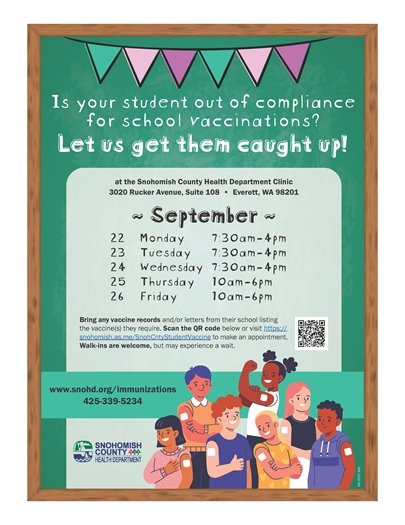
student IMMUNIZATIONS special clinic hours during sept. 22-26, 2025The Public Health Clinic will also be open with special hours for the week of Sept. 22-26 to offer parents a chance to vaccinate their kids who are out of compliance and not allowed back to school. The Public Health Clinic is located at Snohomish County Health Department 3020 Rucker Ave, Suite 108 Everett, WA 98201. Bring any vaccine records and/or letters from their school listing the vaccine(s) they require. Scan the QR code below or visit https://snohomish.as.me/SnohCntyStudentVaccine to make an appointment. Walk-ins are welcome, but may experience a wait. |
|
|
|
|
|
|
|
Black and brown trans careHealth equity power building with halogenHalogen is a fiscally sponsored organization that raises suicide awareness for Black and Brown trans communities. Halogen partners with other social, human, and health groups and organizations. Halogen views suicide as a syndemic – a multi-area public health matter. Halogen is looking for care providers and healthcare leaders to help shape educational and advocacy content around the effects and dynamics of testosterone and estrogen therapy on red blood cell count, blood pressure, and genital tissue in Black and Brown trans communities, on top of the predisposed metabolic factors. Additionally, how STIs/STDs and infectious disease rates are affected. The goal of this work is to provide more information to Black trans individuals so they can ask more in-depth questions about their global health and transition journeys with their providers. This work with care providers and healthcare leaders will build the foundation to expand the work with mental health providers, especially those focusing on PTSD and sexual trauma. To learn more about Halogen and Remy, visit: If you are a care provider or healthcare leader with an interest or focus in Black trans care and infectious disease, and want to collaborate with Halogen, please contact Remy at studio@halogenproject.com |
|
|
|
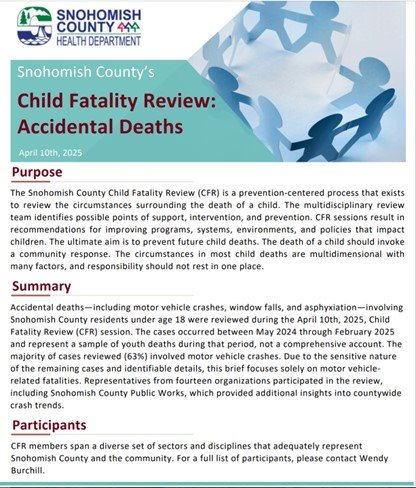
healthy communitieschild fatality reviewSnohomish County Child Fatality Review (CFR) is a prevention-centered process that exists to review the circumstances surrounding the death of a child. A multidisciplinary review team identifies possible points of support, interventions, and modifiable risk factors. CFR sessions result in recommendations for improving programs, systems, environments, and policies that impact children with the ultimate aim of preventing future child deaths. After each review, a data brief is created to help translate child fatality data into actionable insight for the community. Public-facing data briefs launched in March 2024 and can be found here. Please take a few minutes to review the briefs and learn how you and your organization can have an impact on preventing child deaths. |
|
|
|
|
|
|
|
children and family healthchildhood lead poisoning preventionSnohomish County Health Department Public Health Nurses offer case management services for families with children who have blood lead levels at or above the reference value of 3.5 mcg/dl. As a part of these services, when indicated, we, along with an Environmental Health Specialist, provide site testing in people’s homes. In many cases, we uncover unexpected sources of lead exposure during home assessments—reminding us how important it is to remain vigilant. While common culprits like paint and soil are well known, other household items can be just as hazardous. Routine lead testing of products in the home continues to prove invaluable in identifying these hidden threats and guiding families toward safer environments. Some of the lead sources we’ve identified may surprise you: car and house keys, older vinyl mini blinds, vintage toys, cookware, dishes, and even secondhand smoke can be significant contributors. Additional sources include brightly colored pottery, imported spices, and certain traditional cosmetics like kohl or surma. Raising awareness about these lesser-known sources is essential to prevention. As healthcare providers, your role in recommending testing allows us to reach families sooner and give them the opportunity to eliminate sources of exposure. Together, we can help reduce exposure risks and protect children from the lifelong impacts of lead. |
|
|
|
TUBERculosisTB Routine Testing ReminderAre you testing patients born outside the U.S. for TB? National data shows half of healthcare providers are considering TB for non-U.S.-born patients. Identifying and overcoming barriers to TB testing and treatment is crucial. Anyone born outside the U.S. or Western Europe should be tested for TB at least once. For positive results, contact the health department for guidance at 425.339.5225. Let's work together to reduce TB transmission in Snohomish County. Key Points to Remember: Think TB if patients have symptoms like a persistent cough, fever, unexplained weight loss, night sweats, or related radiological findings. High-Risk Groups Include: - Close contacts of active TB cases
- Those with a history of residence or travel to TB-endemic regions (refer to the WHO table)
- Children under 5 with a positive TB test
- Individuals with a history of latent TB infection (LTBI), especially if diagnosed in the past 2 years
- Residents or workers in shelters, correctional, or long-term care facilities
- People with HIV, diabetes, or other immunocompromising conditions
TB-Endemic Regions (2019 Data from WHO list of high burden countries): - Severely Endemic (500+ cases/100,000): Central African Republic, Gabon, Lesotho, South Africa; DPR Korea; Philippines.
- Highly Endemic (300-499 cases/100,000): Angola, Congo, Democratic Republic of Congo, Eswatini, Guinea-Bissau, Liberia, Mozambique, Namibia, Zambia; Indonesia, Myanmar, Timor-Leste; Kiribati, Marshall Islands, Mongolia, Papua New Guinea.
- Endemic (100-299 cases/100,000): Various regions in Africa, the Americas, Eastern Mediterranean, Europe, South-East Asia, Western Pacific.
|
|
|
|
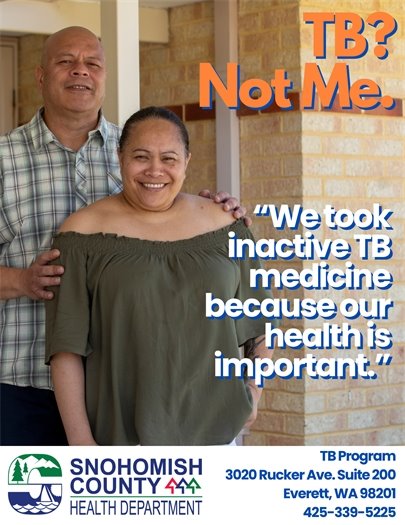 New printable flyers available here RESOURCES: |
|
|
|
|
|
 Share on Facebook
 Share on Twitter
 Share via Email
