|
|
Please Leave a MessageThe Child Care Health Outreach Program is staffed by a multi-disciplinary team of health professionals. To make sure your call is answered by the most knowledgeable staff member, when you call us at 425-252-5415 you will be asked to leave a message. Please do so and let us know the reason for your call. The voicemail box is monitored throughout the day, and your call will be returned as soon as possible by the staff member most equipped to answer your questions. You may also choose to send an email to childcarehealth@co.snohomish.wa.us.
|
|
|
|
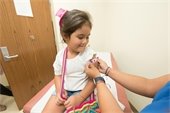
Immunization ReportingIt is the time of the year again to review the immunization records for the children in your care. Child cares and preschools must file an immunization status report with the Washington State Department of Health each year. Reports are due by December 1, 2025. For more information and instructions on completing this report, visit the Department of Health website. Email questions to OICPSchools@doh.wa.gov. If your child care currently participates in the School and Child Care Immunization Module confirm that your roster is currently up to date. For assistance with updating your roster or more information on the School and Child Care Immunization module, email schoolmodule@doh.wa.gov.
|
|
|
|
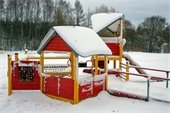
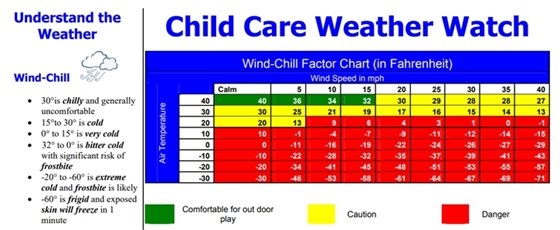
Frozen Playgrounds and Cold WeatherThe child care regulations, WAC 110-300-0146, require equipment on child care playgrounds to be surrounded by an appropriate surfacing material to prevent injuries from falls. Did you know that when the weather turns icy or snowy, this surfacing material may no longer be doing its job? Additionally, the surfaces and handrails of the play structures may become slippery. The Washington State Department of Health has developed a handout that discusses hazards on playgrounds in cold weather. If the play structure is unsafe, have a backup plan for other things the children can do outside. The child care regulations require active outdoor play daily. In the Pacific Northwest, there are very few days over the winter where it is too cold for children to go outside. It is only during intense winds, thunder and lightning, when the temperature is below 20°F, or when the weather is otherwise dangerous (WAC 110-300-0147). The wind can make the temperature feel colder. Use this Child Care Weather Watch Chart to help figure out the wind-chill. Making sure the children have the right clothing is important. WAC 110-300-0147 states that an “early learning provider must dress children for weather conditions during outdoor play time.” The outdoor nature based programs regulations (WAC 110-3020-0147) state that the children must have appropriate “rainy or cold weather clothing such as waterproof boots, rain pants, rain jacket, a moisture-wicking layer, two sets of gloves, and a hat to keep the child's head dry and warm.” Encourage parents to dress children in appropriate, layered clothing. Parents should also provide a change of clothes should a child get wet. Child care providers should have extra cold weather and rain gear on hand if a parent forgets. The Child Care Health Outreach program has a reminder letter for parents about dressing children for the weather. Here are some additional resources that you can share with families and staff:
|
|
|
|
|
|
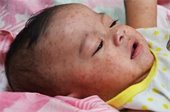
MeaslesAccording to the Washington State Department of Health, there have been 12 cases of measles so far in 2025. To help child cares be prepared in the event a case of measles shows up in their area or facility, here are a couple of helpful resources: If you have questions about measles, you can contact the child care health outreach program at childcarehealth@co.snohomish.wa.us. To report a case of measles in your child care, call 425-339-3503.
|
|
|
|
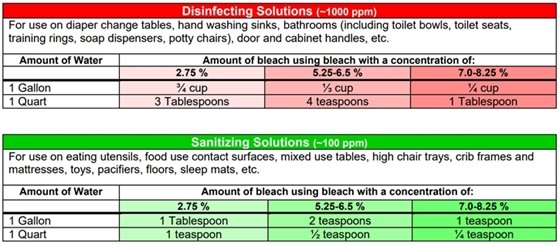
Bleach Mixing Chart TranslatedIn 2024, the Washington State Department of Health (DOH) released an updated bleach and water mixing chart. The bleach chart includes changes made in the bleach recipes to align with post-COVID CDC recommendations. This chart has now been translated into Spanish and Somali. The Child Care program at Public Health Seattle-King County has other information about sanitizing and disinfecting translated into various languages on their website. Note that the disinfection section is RED (where our labels used to be green) and the sanitizing section is LIME GREEN (ours used to be pink). The rationale for the colors is that the disinfectant should be used sparingly and when children are not in the immediate area (thus the red or stop color) and the sanitizer is the safer product for use throughout the day (thus the green or go color). You can find updated labels with the new recipes and colors on our website. |
|
|
|
|
|
|
|
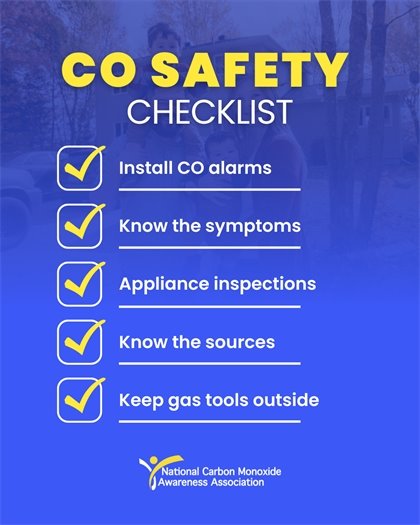
November is Carbon Monoxide Awareness MonthCarbon monoxide poisoning is 100% preventable. Child cares are required to have carbon monoxide alarms. WAC 110-300-0170(g) states: (i) An early learning provider must have and maintain at least one smoke detector per licensed sleeping area and one per floor. Pursuant to the state building code, center early learning providers must comply with WAC 51-50-0907, as now and hereafter amended, and family early learning providers must comply with WAC 51-51-0314, as now and hereafter amended; and (ii) An early learning provider must have and maintain carbon monoxide detectors. Pursuant to the state building code, center early learning providers must comply with WAC 51-50-0915, as now and hereafter amended, and family early learning providers must comply with WAC 51-51-0315, as now and hereafter amended. Here’s a quick safety checklist you can use and share with staff and families during Carbon Monoxide Awareness Month: - Install working CO alarms on every level of your home
- Test your alarms every month
- Never run a generator or car in an enclosed garage
- Know the signs: headache, dizziness, nausea, fatigue
- Schedule regular appliance inspections and vent checks
Discover more carbon monoxide safety tips: https://www.ncoaa.us/co-awareness-month-2025 |
|
|
|
|
|
Free trainings available for Infant/Toddler and Preschool providers. Registration is open now. New series starts November 3, 5, or 6, 2025. See the website for more information. |
|
|
|
|
|
LEad RecallsGround Cinnamon - Additional ground cinnamon products that contain elevated levels of lead have been added to the FDA's recall list of products. Check out the updated alert from the FDA about ground cinnamon products. Children who may have been exposed to lead from these or other sources should be referred to their health care provider for possible blood lead testing. For more information about lead, please reach out to the Snohomish County Health Department at leadprogram@co.snohomish.wa.us or visit our website at www.snohd.org/lead. Child care providers can: |
|
|
|
Emergency Management - Flood SafetySnohomish County Surface Water Management has put out their annual flood safety guide. This guide is designed for residents of Snohomish County and provides information on a wide range of flood-related topics, such as how to protect your home before a flood, what to do if flooding occurs, and steps to take to recover after a flood. You can find more information in their Flood Safety Guide and their flood information webpage. This information may be helpful if your child care facility is located in an area at risk of floods or can be helpful to your staff or families. |
|
|
|
|
|
|
|
We appreciate your patience as we continue to update our courses to enhance your learning experience. Classes are being offered AT NO COST at this time. For questions about our online classes, contact our team at ChildCareHealth@co.snohomish.wa.us or via phone at 425.252.5415. |
|
|
|
This Month's Featured Classes
|
|
|
|
|
|
Children's Environmental Health Basics - NEW!
In this course you will learn some basic information about several different children’s environmental health topics including water, soil, air, and chemical exposures. You will receive information about what you can do to keep your child care or early learning program site safe and healthy for the children in your care. This presentation was developed in collaboration with the Washington State Department of Health WIIN and WCSP programs. Register Here |
|
|
|
|
|
Childhood Lead Poisoning Prevention
Lead remains a problem in Washington State and Snohomish County. This course is designed to educate child care providers and staff on how to keep children and families safe from the harmful effects of lead. Did you know there is no safe level of lead? In this course you will learn where lead was historically used, where it is currently still found, and simple steps you can take to protect children and families from the effects of lead poisoning.
Register Here |
|
|
|
|
|
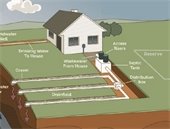
Septic Care Class for Home Child Cares in Snohomish County This course is specifically designed for Snohomish County child cares with a septic system. Please make sure this course is appropriate for your situation before registering. Child cares with septic systems are responsible for protecting the health and safety of children in their care from potential risks. Learning how to best care for your system will help create a safe child care environment. This self-paced course will cover topics including how your system works, how to find your septic system records, best practices for care and maintenance, signs of a failing septic system, how to find septic contractors and what to expect, and financial assistance options for septic systems. Register Here |
|
|
|
Contact InformationSnohomish County Health Department
3020 Rucker Ave., Ste. 202, Everett, WA 98201
Email: ChildCareHealth@co.snohomish.wa.us
Program Phone: 425.252.5415
Website: http://www.snohd.org/childcare
Received this as a forward? Sign up for our newsletter by clicking here.
The Child Care Health Outreach Program staff are available to consult with you on these and other health, safety, and nutrition topics by phone, by email, or at your child care facility. |
|
|
|







 Share on Facebook
 Share on Twitter
 Share via Email
