|
|
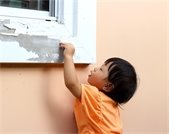
Responding to Aggressive Behavior in ToddlersSupporting toddlers through big feelings is an important part of early childhood care, and aggressive behavior—like hitting, biting, or throwing—can often be a toddler’s way of communicating needs they can’t yet express. Outlined below is a practical, three-step framework to help you understand what may be driving a child’s behavior, respond in ways that reduce stress and prevent escalation, and guide toddlers toward healthier skills over time. By observing key factors, responding with intention, and creating opportunities for learning, providers can foster safe, nurturing environments where children feel understood and supported. Step 1: Observe & Consider Contributing FactorsBefore responding, pause to look for what might be causing the behavior. Things to Look For - Current life circumstances
- Changes at home
- Physical illness
- Not enough sleep
- Other stressors that may impact behavior
- Developmental stage
- What behaviors are developmentally appropriate for this age?
- Are the activities, expectations, or routines appropriate?
- Is the child frustrated with a difficult task?
- Does the child need support with functional communication (expressing needs and feelings appropriately)?
- Temperament
- What is this child’s baseline behavior and typical way of responding?
Questions to Ask Yourself - Reflect on your own temperament and experiences
- Are your emotions influencing the interaction?
- How can you maintain self-awareness and model regulation?
Step 2: Respond Based on Your UnderstandingUse what you observed to guide a calm, supportive response. - Prioritize Prevention
- Recognize behavior patterns and adjust the environment or routine.
- Offer transition warnings and visual cues.
- Facilitate Understanding
- Name feelings and describe the connection between feelings and behavior.
- Model appropriate communication and expression.
Quick Response Toolkit (Strategies you can use in the moment) - Model staying calm, even if you feel frustrated.
- Acknowledge the child’s feelings and the need behind the behavior.
- Communicate using simple words, gestures, and visual supports.
- Offer safe, appropriate alternatives to aggression.
- Redirect attention or provide an engaging distraction.
- Introduce coping tools (deep breaths, sensory items, movement breaks).
- Suggest taking a break or quiet moment to return to baseline.
Example: A toddler throws a toy after being told it is time to clean up.
You might say: “You feel mad. You wanted to keep playing. Let’s take a deep breath together. You can choose to help put toys in this bin or take a break first.” Step 3: Facilitate LearningOnce the child is calm, help them learn new skills. - Point out consequences in simple, age-appropriate terms.
- Brainstorm better choices for next time (“Next time you feel mad, you can stomp your feet or ask for help”).
- Remind the child you are available to help and keep them safe.
When to Seek Additional Support If a child’s aggressive behaviors are: - reckless,
- high intensity,
- seemingly unprovoked,
- following a traumatic event, or
- interfering with their ability to engage in positive interactions,
…additional support is recommended. A pediatrician can make referrals for assessment or counseling. Support may also be available through the child’s school district. If a child in your care requires additional behavioral support or accommodations, an individual care plan must be in place. See: WAC 110-300-0300: Individual Care Plan. To access individual care plan templates and a thorough checklist created by Public Health Seattle and King County, see: Care plans and authorization forms - King County, Washington. Reference: ZERO TO THREE. (2025). Aggressive behavior in toddlers. https://www.zerotothree.org/resource/aggressive-behavior-in-toddlers/
|
|
|
|
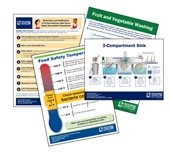
Food Safety InformationChild care providers are required to follow the food safety practices detailed in the Food Worker Manual and have a valid Washington State Food Worker Card. The Snohomish County Health Department Food Safety team is always working on updating and expanding their Food Safety Educational Resources page which has a lot of excellent information and posters that can be helpful for child care kitchens. If you have never visited their website, we encourage you to do so. All of these handouts are also available in Chinese, Korean, Spanish, Punjabi, Thai and Vietnamese. Use the link or the QR code below to go to their page and see all the resources available. |
|
|
|
|
|
RECALLED BABY FORMULAFederal agencies are investigating a multistate outbreak of infant botulism linked to infant formula. Infant botulism happens when a baby swallows Clostridium botulinum spores that grow in the gut and make toxin. Infant botulism often starts with constipation but is usually first noticed as difficulty feeding (sucking and swallowing), a weak and altered cry, and lack of head control. On November 11, 2025, ByHeart Inc. recalled all infant formula products due to contamination with a bacteria that causes infant botulism. ByHeart Whole Nutrition Infant Formula is available for sale online and at major retailers nationwide. Parents and caregivers are urged to stop using any ByHeart Whole Nutrition infant formula immediately. This includes: - All lot numbers
- All sizes of cans and single serve packets
For more information: The California Department of Public Health has a public hotline to support caregivers with concerns about this outbreak and infant botulism. They are available 7 days a week from 7am to 8pm PST at 1-833-398-2022. This hotline serves the entire United States. |
|
|
|
Exclusion Guidelines REMINDERAs we head into the winter months, now is a good time to review your child care’s exclusion policy for ill children. When do you require children with symptoms of illness to stay home from care? When can they return? Review the child care licensing regulations and make sure that your policy meets these requirements. You can always be more strict than this, but it must be written into your policies so that parents are clear about what to expect. (4) An ill child must be sent home or reasonably separated from other children if: (a) The illness or condition prevents the child from participating in normal activities; (b) The illness or condition requires more care and attention than the early learning provider can give; (c) The required amount of care for the ill child compromises or places at risk the health and safety of other children in care; or (d) There is a risk that the child's illness or condition will spread to other children or individuals. (5) Unless covered by an individual care plan or protected by the ADA, an ill child, staff member, or other individual must be sent home or isolated from children in care if the ill individual has: (a) A fever 101 degrees Fahrenheit for children over two months (or 100.4 degrees Fahrenheit for an infant younger than two months) by any method, and behavior change or other signs and symptoms of illness (including sore throat, earache, headache, rash, vomiting, diarrhea); (b) Vomiting two or more times in the previous twenty-four hours; (c) Diarrhea where stool frequency exceeds two stools above normal per twenty-four hours for that child or whose stool contains more than a drop of blood or mucus; (d) A rash not associated with heat, diapering, or an allergic reaction; (e) Open sores or wounds discharging bodily fluids that cannot be adequately covered with a waterproof dressing or mouth sores with drooling; (f) Lice, ringworm, or scabies. Individuals with head lice, ringworm, or scabies must be excluded from the child care premises beginning from the end of the day the head lice, ringworm, or scabies was discovered. The provider may allow an individual with head lice, ringworm, or scabies to return to the premises after receiving the first treatment; or (g) A child who appears severely ill, which may include lethargy, persistent crying, difficulty breathing, or a significant change in behavior or activity level indicative of illness. (8) An early learning provider may readmit a child, staff member, volunteer or household member into the early learning program area with written permission of a health care provider or health jurisdiction stating the individual may safely return after being diagnosed with a contagious disease pursuant to WAC 246-110-010 (3), as now and hereafter amended. Take the time now to remind families about your policies. Share your policy reminders in a newsletter, post on a parent board, or send out through your program’s preferred messaging app. Emphasize that everyone needs to play their part to keep germs out of the child care space. Here are a few additional resources that you may find helpful: - Keep Me Home If Poster – this resource helps families understand when children need to stay at home. It is also available in a variety of languages.
- Hand Foot and Mouth Disease (HFMD) Guidance – We are still seeing HFMD popping up in child cares. Refer to the information in our September 2025 newsletter for helpful tips.
- Respiratory Illness Guidance – This handout from the Washington State Department of Health provides guidance for when to stay home when there are symptoms of respiratory illness, such as COVID, influenza, or RSV. It is also available in other languages.
- Respiratory Illness Dashboard – This webpage can give you an idea of the level of illness spreading in the community.
Contact us for assistance. Remember that if you have questions about illness symptoms or exclusions from child care, our staff are ready and available to assist you. Please contact us at childcarehealth@co.snohomish.wa.us or call 425-252-5415 (you will be asked to leave a message, but rest assured one of our staff will return your call). |
|
|
|
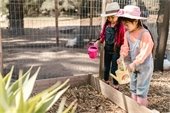
Gardening Grant AvailableThough the leaves are falling and the temperatures are getting colder, now may be the time to think about adding a garden spot to your outdoor child care space. KidsGardening.org is a non-profit organization that has a Youth Garden Grant available for eligible programs. The website also has: - many lesson plans, book lists, and activities for use in the classroom
- resources that can help you in planning a garden space or helping your plants to thrive
You can find more information about the grant and the instructions to apply on their website. The deadline for applications is December 12, 2025.
|
|
|
|
|
|
LEad RecallsPots and Cookware - The U.S. Food and Drug Administration (FDA) is warning retailers and consumers not to sell or use certain imported cookware that may leach significant levels of lead (Pb) into food. Some types of imported cookware products made from aluminum, brass, and some aluminum alloys have been tested and found to leach lead into food when used for cooking, thereby making food unsafe. Ground Cinnamon - An additional ground cinnamon product, Jiva Organic Ground Cinnamon, was added to the FDA's recall list of products that contain elevated levels of lead. Check out the updated alert from the FDA about ground cinnamon products. |
|
|
|
Children who may have been exposed to lead from these or other sources should be referred to their health care provider for possible blood lead testing. For more information about lead, please reach out to the Snohomish County Health Department at leadprogram@co.snohomish.wa.us or visit our website at www.snohd.org/lead. |
|
|
|
|
|
|
|
We appreciate your patience as we continue to update our courses to enhance your learning experience. Classes are being offered AT NO COST at this time. For questions about our online classes, contact our team at ChildCareHealth@co.snohomish.wa.us or via phone at 425.252.5415. |
|
|
|
This Month's Featured Classes
|
|
|
|
|
|
Children's Environmental Health Basics - NEW!
In this course you will learn some basic information about several different children’s environmental health topics including water, soil, air, and chemical exposures. You will receive information about what you can do to keep your child care or early learning program site safe and healthy for the children in your care. This presentation was developed in collaboration with the Washington State Department of Health WIIN and WCSP programs. Register Here |
|
|
|
|
|
Childhood Lead Poisoning Prevention
Lead remains a problem in Washington State and Snohomish County. This course is designed to educate child care providers and staff on how to keep children and families safe from the harmful effects of lead. Did you know there is no safe level of lead? In this course you will learn where lead was historically used, where it is currently still found, and simple steps you can take to protect children and families from the effects of lead poisoning.
Register Here |
|
|
|
|
|
Septic Care Class for Home Child Cares in Snohomish County This course is specifically designed for Snohomish County child cares with a septic system. Please make sure this course is appropriate for your situation before registering. Child cares with septic systems are responsible for protecting the health and safety of children in their care from potential risks. Learning how to best care for your system will help create a safe child care environment. This self-paced course will cover topics including how your system works, how to find your septic system records, best practices for care and maintenance, signs of a failing septic system, how to find septic contractors and what to expect, and financial assistance options for septic systems. Register Here |
|
|
|
Contact InformationSnohomish County Health Department
3020 Rucker Ave., Ste. 202, Everett, WA 98201
Email: ChildCareHealth@co.snohomish.wa.us
Program Phone: 425.252.5415 (you will be asked to leave a message; a staff person will return your call)
Website: http://www.snohd.org/childcare
Received this as a forward? Sign up for our newsletter by clicking here.
The Child Care Health Outreach Program staff are available to consult with you on these and other health, safety, and nutrition topics by phone, by email, or at your child care facility. |
|
|
|
|
|








 Share on Facebook
 Share on Twitter
 Share via Email
