|
|
|
|
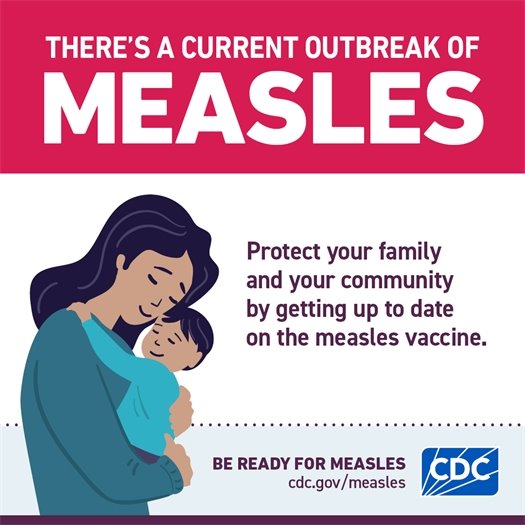
MEASLES - Time To REview RecordsYou can find information about the current measles outbreak in Snohomish County on our Measles dashboard and in the latest media release. There are currently 6 cases reported. We encourage you to also check out the document put out by the Washington State Department of Health called Measles Preparedness for Child Cares and Early Learning. Also, be aware that parents may be asking you to update immunization records for the MMR vaccine. This is because there are new interim vaccine guidelines in Washington State due to the measles outbreak. It’s now encouraged for 1-17-year-olds in Snohomish County to get their 2nd MMR as soon as they are eligible and not necessarily wait for school entry. Here are some steps that child care providers can take: - Review immunization records for your facility. Make sure the children in your program are up-to-date for their age on the MMR vaccine. (The vaccine requirement for child care attendance is one dose of MMR at 12 through 15 months of age and a second dose at 4 through 6 years of age); some children may receive the second dose of vaccine earlier due to the current outbreak).
- Make sure each child's Certificate of Immunization Status (CIS) form is signed and up-to-date.
- Make sure you know the MMR vaccine status for all of your staff and that they meet the requirements of WAC 110-300-0120 (3).
- Make sure that you have a current list of children who have exemptions to vaccines. The Washington State Department of Health provide sample child care susceptible child list forms in MS Word or MS Excel format. Personal/philosophical exemptions are not permitted for the measles vaccine.
- Watch for symptoms of measles (fever, cough, runny nose, irritated eyes, rash) and follow your child care’s exclusion guidelines (WAC 110-300-0205) and the Keep Me Home If poster.
- Do not exclude non-immune or non-vaccinated children from child care at this time unless they are showing symptoms or you are instructed to do so by the Snohomish County Health Department.
- Because measles is a notifiable condition, you must call the Snohomish County Health Department’s disease reporting line at 425-339-3503 to report if a child or staff in your child care is diagnosed with measles.
|
|
|
|
Autism Spectrum Disorder (ASD)
Autism Spectrum Disorder (ASD) refers to a developmental disability consisting of a wide range of symptoms and characteristics. According to the CDC, while some individuals with ASD have a genetic condition or a known difference, other causes are still unknown. It is believed that a variety of causes, including environment, impact early brain development. Symptoms of ASD can emerge very early in development, sometimes showing up within the first 12 months of life. Other children may be on track to meet developmental milestones up until 18 to 24 months, when they suddenly begin to regress or stop learning new developmentally appropriate skills. Common signs and symptoms of ASD may include: - Difficulty with social interaction and communication
- Avoids or does not maintain eye contact
- Does not respond to name being called by 9 months of age
- Does not exhibit facial expressions by 9 months of age
- Does not use gestures, or uses very few gestures by 12 months of age
- Does not engage in interactive games by 12 months
- Does not engage in pretend or imaginative play by 30 months
- Has difficulty understanding other’s feelings or describing own feelings by 36 months of age
- Does not engage in turn taking by 60 months of age
Repetitive or Restricted Behaviors: - Carefully lining up toys or objects in a specific manner; may get upset when moved
- Continually repeating words or phrases
- Engages with toys in a specific way every time; may be different than typical manner of play for the toy
- Hyper-focused on one part of an object (e.g., the wheels of a toy truck)
- Must follow a specific routine and is upset by minor changes
- Exhibits obsessive interests (e.g., cars, objects of one color, etc.)
- Exhibits stimming behaviors such as flapping hands, rocking body, walking on tip toes
- Strong or unusual reactions to sensory input (e.g., loud noises, smells, bright lights, textured foods, etc.)
Other Characteristics: - Delayed language and communication
- Delayed movement or motor skills
- Delayed learning or cognitive abilities
- Hyperactive, impulsive, and/or inattentive behavior
- Unusual eating and/or sleeping patterns
- Gastrointestinal issues (e.g., constipation)
- Stress, anxiety, or excessive worry
- Difficulty transitioning between activities
- Lack of fear or excessive fear
The signs of ASD can be identified through early screening and behavioral observation. The CDC Program Learn the Signs. Act Early. Program has developed materials to assist parents and child care providers in monitoring development and recognizing when there is a cause for concern. See the following link for Milestone Trackers, resources for engaging parents, and what to do if you are concerned about your child’s development: Learn the Signs. Act Early. | Learn the Signs. Act Early. | CDC Screening for ASD should occur at 18-, 24-, and 30-month well-child visits or additionally if a concern has been expressed. Check out these links for additional information: Signs and Symptoms of Autism Spectrum Disorder | Autism Spectrum Disorder (ASD) | CDC Inclusion | Washington State Department of Children, Youth, and Families
|
|
|
|
Preventing MoldMold is a common issue in our wet area of the country. Caused by increased moisture and humidity in the air, mold and mold spores can make the indoor air in your child care unhealthy, leading to irritation, allergic reactions, or even triggering asthma in some people. Mold can be controlled by finding and eliminating sources of moisture. Here are a few things you can do to prevent mold from taking hold in your child care space: - Remove water promptly - clean up water leaks or spills immediately and make sure that surfaces dry within 24-48 hours; if flooding has occurred, make sure you take special precautions when cleaning up.
- Remove moisture in the air - use dehumidifiers and air conditioners to keep the humidity in the air between 30% and 60%.
- Remove or prevent condensation - open windows or use exhaust fans when cooking, showering, or doing other activities that generate a lot of moisture indoors to prevent condensation; wipe down windows or pipes if condensation does occur.
- Keep water away from your home - direct downspouts from gutters and grade the soil away from the foundation of your home or child care building; make sure there are no leaks in your roof.
To learn more about how to prevent mold in your child care, check out the following resources from the US Environmental Protection Agency:
|
|
|
|
|
|
This program is open to licensed family home child cares, operated out of single-family homes, in King, Kitsap, Pierce, and Snohomish Counties. If selected for the program, King County provides program participants with a combination of the following installations, depending on the building’s needs: - Heat pumps for high efficiency space heating and cooling
- Insulation, air sealing, and ventilation (also known as weatherization) to improve energy efficiency, health, and comfort
- Heat pump water heaters for low-cost water heating
- Induction cookstoves
King County will manage all installations, including covering the costs of equipment and materials, and hiring and paying contractors. This is not a grant program. While not an eligibility requirement, this program prioritizes family home child cares located in frontline communities, defined as those located in any of the following geographies: - Puget Sound Clean Air Agency overburdened communities
- WA Environmental Health Disparities Map score of 9 or more
- 2024 U.S. EPA defined low-income and disadvantaged communities
To see if your family home child care is within one of these priority communities, search your address here. Program applications are now open! To learn more, check out the Energize – Family Home Child Cares website, and sign up to join the following online information session: Information session #2: February 5 at 6:30pm Funding Acknowledgement This project has been funded wholly or in part by the United States Environmental Protection Agency under assistance agreement 84101001 to King County of Washington. The contents of this document do not necessarily reflect the views and policies of the Environmental Protection Agency, nor does the Environmental Protection Agency endorse trade names or recommend the use of commercial products mentioned in this document, as well as any images, video, text, or other content created by generative artificial intelligence tools, nor does any such content necessarily reflect the views and policies of the Environmental Protection Agency. |
|
|
|
Resource for Vaccine FactsThe American Academy of Pediatrics (AAP) has resources available to help address common vaccine misconceptions through its Fact Checked series. Each resource in the series includes key facts, an evidence snapshot, background on why this topic matters, and quotes from experts. This is great information to share with families when having discussions about child care vaccine requirements.
|
|
|
|
|
|
|
|
|
|
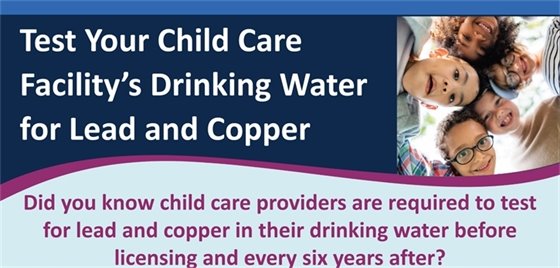
FREE WATER TESTING FOR LEADThe Washington State Department of Health offers free water testing for child care facilities. If you have not had your water tested in the past 6 years through this program, please visit their website to get more information and sign up. |
|
|
|
|
|
|
|
We appreciate your patience as we continue to update our courses to enhance your learning experience. Classes are being offered AT NO COST at this time. For questions about our online classes, contact our team at ChildCareHealth@co.snohomish.wa.us or via phone at 425.252.5415. |
|
|
|
This Month's Featured Classes
|
|
|
|
|
|
Children's Environmental Health Basics
In this course you will learn some basic information about several different children’s environmental health topics including water, soil, air, and chemical exposures. You will receive information about what you can do to keep your child care or early learning program site safe and healthy for the children in your care. This presentation was developed in collaboration with the Washington State Department of Health WIIN and WCSP programs. Register Here |
|
|
|
|
|
Childhood Lead Poisoning Prevention
Lead remains a problem in Washington State and Snohomish County. This course is designed to educate child care providers and staff on how to keep children and families safe from the harmful effects of lead. Did you know there is no safe level of lead? In this course you will learn where lead was historically used, where it is currently still found, and simple steps you can take to protect children and families from the effects of lead poisoning.
Register Here |
|
|
|
|
|
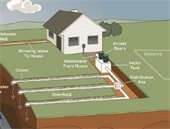
Septic Care Class for Home Child Cares in Snohomish County This course is specifically designed for Snohomish County child cares with a septic system. Please make sure this course is appropriate for your situation before registering. Child cares with septic systems are responsible for protecting the health and safety of children in their care from potential risks. Learning how to best care for your system will help create a safe child care environment. This self-paced course will cover topics including how your system works, how to find your septic system records, best practices for care and maintenance, signs of a failing septic system, how to find septic contractors and what to expect, and financial assistance options for septic systems. Register Here |
|
|
|
Contact InformationSnohomish County Health Department
3020 Rucker Ave., Ste. 202, Everett, WA 98201
Email: ChildCareHealth@co.snohomish.wa.us
Program Phone: 425.252.5415 (please leave us a message and someone will return your call)
Website: http://www.snohd.org/childcare
Received this as a forward? Sign up for our newsletter by clicking here.
The Child Care Health Outreach Program staff are available to consult with you on these and other health, safety, and nutrition topics by phone, by email, or at your child care facility. |
|
|
|
|
|










 Share on Facebook
 Share on Twitter
 Share via Email
