‘We’re in This Together,’ WA State Health Secretary Says
Dennis Worsham returns to Snohomish County Health Department as part of his “Listen, Learn and Lead” tour
It’s been just over 100 days since Dennis Worsham started a cross-state tour as Washington State’s new Secretary of Health. He’s logged more than 8,000 miles and tallied more than 4,000 “encounters” with individual stakeholders (some repeat meetings). After his visit to Everett on Friday, Dec. 5, to the Snohomish County Health Department (SCHD), Worsham has visited with 25 of the state’s 35 local health jurisdictions.
“It’s been really great to just sit, listen and hear what is important to people,” said Worsham, who started his new role in July after two-and-a-half years at the helm of SCHD. His “Listen, Learn and Lead tour” has also become a “good will” tour, he says. “People feel so much fear and isolation. They are worried about the governmental public health system and what can be done to strengthen our ability to navigate this difficult time. We’re letting people know we’re in this together and we’re committed.”
Worsham met with new Department Director Kim Van Pelt, Health Officer Dr. James Lewis and other senior leaders to get feedback on key issues for local health agencies.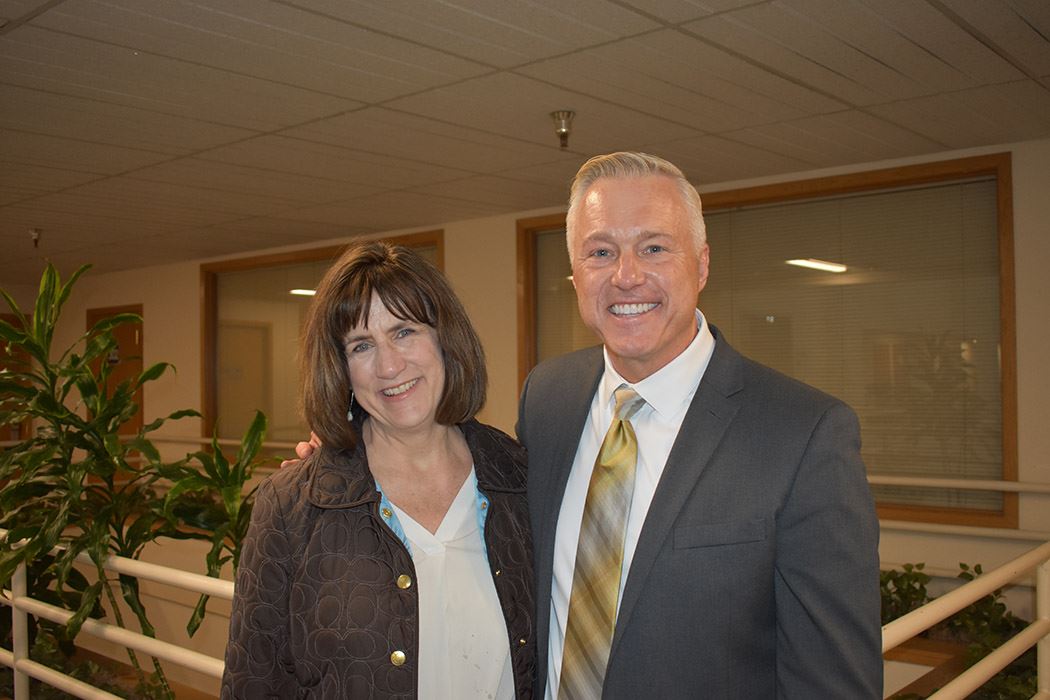
Pictured: Kim Van Pelt and Dennis Worsham on Dec. 5, 2025
One of the recurring themes – echoed by SCHD leadership – is the ongoing erosion of federal support for longstanding vaccine recommendations. Vaccines are considered one of public health’s greatest achievements, saving hundreds of millions of lives from preventable diseases such as smallpox, measles and polio.
On Friday, while Worsham was meeting with SCHD leadership, a federal vaccine advisory committee (known as the Advisory Committee on Immunization Practices, or ACIP) further chipped away at evidence-based guidelines, recommending that hepatitis B shots no longer be automatically given to newborns. It’s a move that has been widely critiqued by scientists and public health advocates as hepatitis B can lead to chronic liver disease, liver failure or liver cancer if untreated.
“Everyone is really worried about vaccines – the misinformation and potentially if there will be an interruption in the vaccine supply or affordability,” Worsham said. If ACIP changes its current processes, it could impact the ability of health care organizations to purchase vaccines in bulk, he explained. As Secretary of Health, Worsham oversees the regulation of healthcare organizations in the state.
More unified messaging needed
Worsham says it’s important for public health agencies to promote pro-vaccine messaging with branding that looks and feels the same. “If we are going to tackle misinformation, the more unified we are, then that reoccurring message is going to be really important,” he said.
DOH could help produce materials that local jurisdictions could then use with “their own local flavor or celebrity” – trusted messengers for public service announcements. “That has come up in almost every conversation – the need for support on how to address misinformation,” Worsham said.
As federal agencies become less reliable, Washington state is turning toward new entities such as the West Coast Health Alliance, which will set recommendations on infectious-disease prevention based on already existing science. The alliance also will look for direction from the American Academy of Pediatrics, the American College of Obstetricians & Gynecologists and the recently established Governor’s Public Health Alliance.
Worsham has also been focusing on access, quality and affordability of health care. He’s been meeting with rural hospitals, especially in eastern Washington and on the Olympic Peninsula, who are under pressure from federal funding cuts.
Seeking community input and data integrity
Worsham has also been conferring with legislators and community-based organizations. “We need to strengthen our community-based presence,” he said. “Is there a space in our equity journey to build a stronger system and bring community voices into our decision-making and policy-making processes?”
Data and data integrity emerged as another key theme of his tour. “Are we making sure the health information we have is protected (including those who are undocumented or seeking gender-affirming care) and are we making sure we are not setting people up to be harmed in any way?”
While the state collects data from counties like Snohomish, he said, the state should also make sure that counties have access to the data to inform their own policies.
Funding a 'hot mess'
Funding for public health and health care has been a “hot mess,” Worsham acknowledged. “With the loss of federal funding, the state can’t backfill that loss,” he said. “But a lot of [cuts] have been reversed through court orders. So there really have been no reductions.”
Some federal funds are set to expire, however, and Worsham said he will prioritize continuing those services with the state. Snohomish County officials are worried about lower funds for HIV/STI work as well as for immunization and outreach efforts. Foundational Public Health Services, which provide significant funding to local health agencies for a range of services, have already been cut by the state. Worsham said DOH will work with state lawmakers to maintain the current level of FPHS funding. “But it’s been very clear from the governor’s office – no new budget ask this session.”